Digitally enabled health systems
Supporting youth co-creation of digitally enabled health systems
Health systems across the globe are increasingly adopting hybrid models in which digital technologies complement in-person health services. The Lancet and Financial Times Commission on Governing health futures 2030’s report recommended that digital health systems must be co‑designed and governed by young people in order to be responsive to their health needs and prevent health inequalities from widening. However, few digital initiatives allow young people to meaningfully shape their health futures and co‑design digitally enabled health systems that address their health priorities such as mental health and sexual and reproductive health.
Building on the Commission’s extensive work, DTH‑Lab is working with young people – including young health professionals – in low and middle‑income countries, as well as vulnerable groups in high income countries, to develop a framework for digitally enabled health systems co‑created with youth and built for all.
DTH‑Lab partners with youth‑led organizations and young people at the global, regional and national level, to identify and overcome barriers to the adoption of effective digital health solutions. Our research and policy analysis focuses on identifying the ways in which the journey towards digitally enabled health systems can have the greatest impact on young people’s health and well‑being.
Main research questions
What is a digitally enabled health system?
DTH-Lab's vision for digitally enabled health systems: digital solutions need to be standards-based and interoperable to ensure continuity of care across digital public infrastructure (DPI) and private sector building blocks of the digitally enabled health system.
A digitally enabled health system is a hybrid health system in which digital solutions and data strengthen and support health promotion, disease prevention, diagnosis, disease management, rehabilitation and palliative care in an equitable and sustainable manner. Digital solutions are integrated across services to improve access, continuity, quality and efficiency of care, while complementing in-person interactions.
A digitally enabled health system can benefit health service users and providers in a number of ways. For example, individuals can choose whether they engage with care online, in-person or through blended approaches depending on their needs, context and preferences. They can access health information, their health data, consultations, triage, follow-up care and peer support through connected digital solutions, while also benefiting from high quality face-to-face services. Health professionals can leverage AI and digital tools to provide clinical support, reduce administrative burden and improve patient care quality. Public health authorities can also use digital solutions to deliver timely health promotion and prevention messaging, strengthen public health surveillance, coordinate services and engage communities more effectively.
A digitally enabled health system expands the traditional boundaries of healthcare by connecting health services across sectors such as education and community settings. It can support social connectivity and community building by enabling regular communication between individuals and health professionals, and by fostering trusted digital spaces for support and engagement.
DTH-Lab’s vision for digitally enabled health systems aligns with the goals of the WHO Global strategy on digital health 2020-2027 and the WHO Global Initiative on Digital Health (GIDH).
Digital solutions need to be standards-based and interoperable to ensure continuity of care across digital public infrastructure (DPI) and private sector building blocks of the digitally enabled health system.
Grounded in strong governance, interoperability, privacy protections and meaningful participation, a digitally enabled health system must be designed to be inclusive, equitable, secure, cost-effective and responsive to people’s evolving needs.
Latest resources
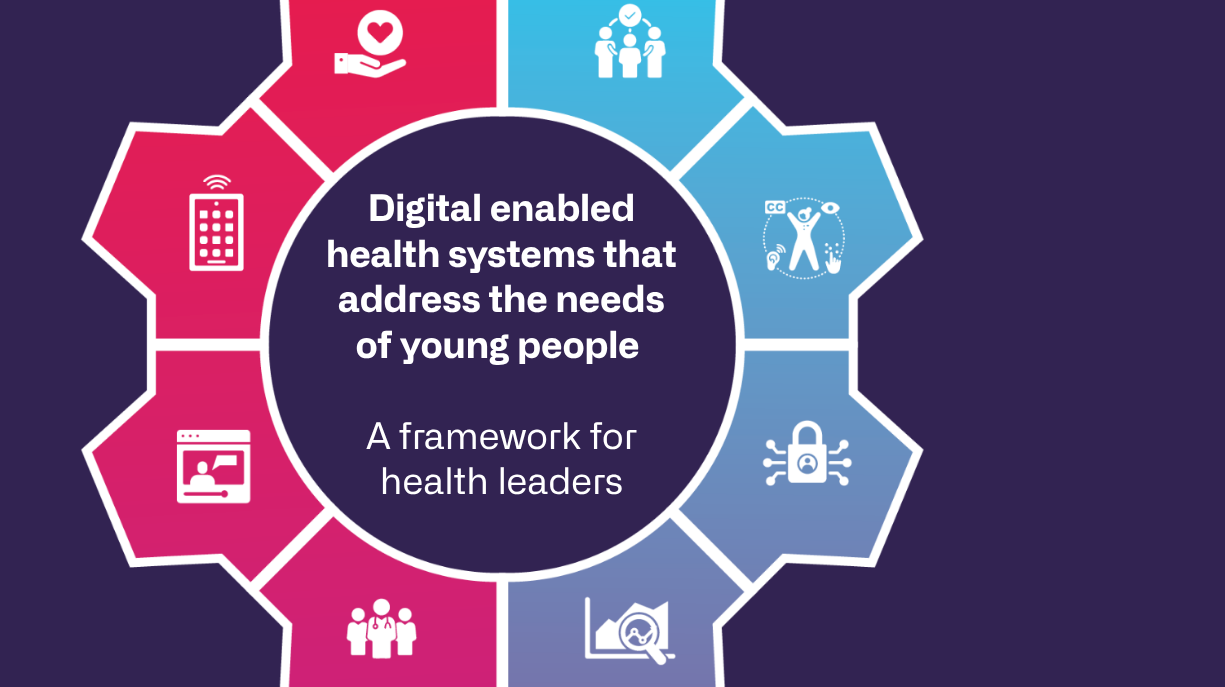
This framework provides guidance for health leaders on how to design and implement digitally enabled health systems that address the needs of young people between 10 and 29 years of age.
Developed by DTH-Lab through global and regional consultations, the framework aligns with the WHO Global Strategy on Digital Health (2020–2027), GIDH and broader global efforts to promote equitable, standards-based and people-centred digital transformation in health systems.
This blueprint will set out young people’s vision for digitally enabled health systems and guide different actors
In 2023, the DTH-Lab Regional Youth Champions (RYCs) were invited to share a short essay on what a digital first health system means to them
Building on our online global youth consultations, we’ve now gathered regional insights from over 300 youth under 30 across 80 countries.
Resources

Other work