

Being Online: Digital Gallery
Visual expressions of youth experiences of digital well-being
About the Gallery
The Being Online: Digital Gallery is an initiative by DTH-Lab, in collaboration with Global Mental Health Action Network - Child and Youth Working Group.
Following over 100 submissions from nearly 40 countries, the gallery brings together 41 artworks from 21 countries that reveal the complexity of young people’s relationships with digital environments.
The initiative uses art as a medium to engage young people and advocate for healthier and safer digital spaces. Language often reaches its limits when faced with experiences that are complex, contradictory and still emerging, such as life online today. Art offers an alternative language for expressing the emotional, social and political realities of these spaces. In doing so, it offers a different kind of knowledge, one that complements research and policy by showing what is often difficult to articulate.
Across the gallery, young people explore identity, overload, belonging, loneliness, joy and hope, revealing how digital environments shape their mental health and everyday life. These artworks show what it means for young people to grow up, connect and express themselves in a digital world. Rather than reducing digital environments to questions of risk or safety alone, they reveal the complexity and ambiguity of being online today.
Curated by:
Ananya Choyal, Policy and Research Associate
Melanie Kuhrn, RYC
Nada Zammel, RYC
Read more about the project here.
Identity, privacy and belonging
The Tree That Never Slept
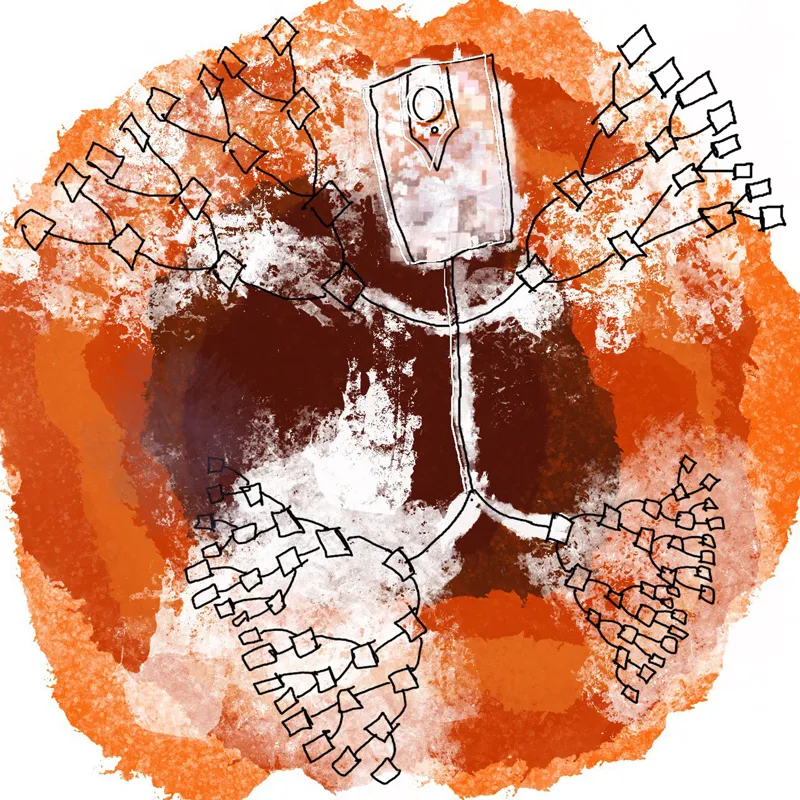
This artwork begins with one phone. One image. One moment meant to stay private. But the phone does not remain singular. It grows branches.
What starts as connection becomes circulation. The image moves: forwarded, saved, duplicated, until it no longer belongs to a person but to a system. The body at the centre disappears; the network remains.
As a survivor of image-based abuse, this work reflects how technology facilitates gendered violence not through intent, but through design. Platforms reward speed, reach, and silence. Harm spreads faster than accountability.
The branches represent the constant demand to stay online: to explain, defend, survive; while the violence continues to multiply. Logging off does not ensure safety when memory, screenshots, and servers do not forget.
This is not a story of one phone. It is a map of how intimacy becomes infrastructure, and how gendered bodies are made endlessly shareable using the internet.
Anukriti S.
India • 25-30 y/o • ♀
Emotions online
Funny Faces
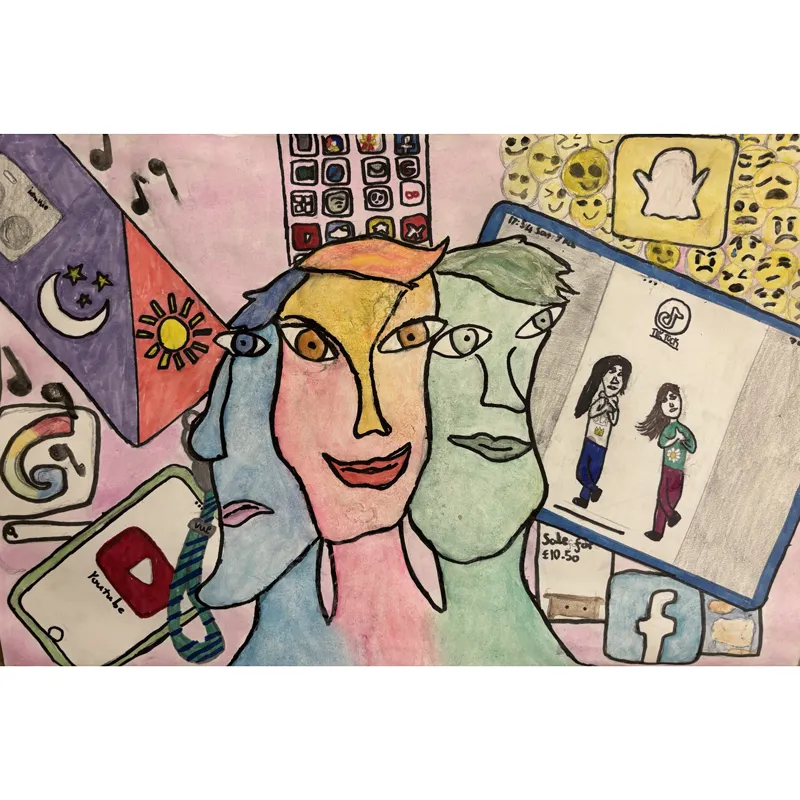
The three faces in the middle of the painting are supposed to show happiness, sadness and curiosity. The apps on the side are apps that can be a bit annoying or show things that can be inappropriate. For example, Snapchat can be really annoying because it can make you pay for filters. And because the apps use emojis, I used emojis to show the different emotions the internet makes me feel.
TikTok is one of the main apps people have. Lots of my friends have it even though they are probably too young to go on TikTok. At my sister’s birthday party, her friend was on TikTok the whole time.
I chose to do abstract art because that way I can show more than one feeling in the painting. I also used lots of colours because the internet can make me feel very colourful (and it uses lots of colours).
Ada H.
UK • 9-13 y/o • ♀
Emotions online
Captivity (Kegnt)
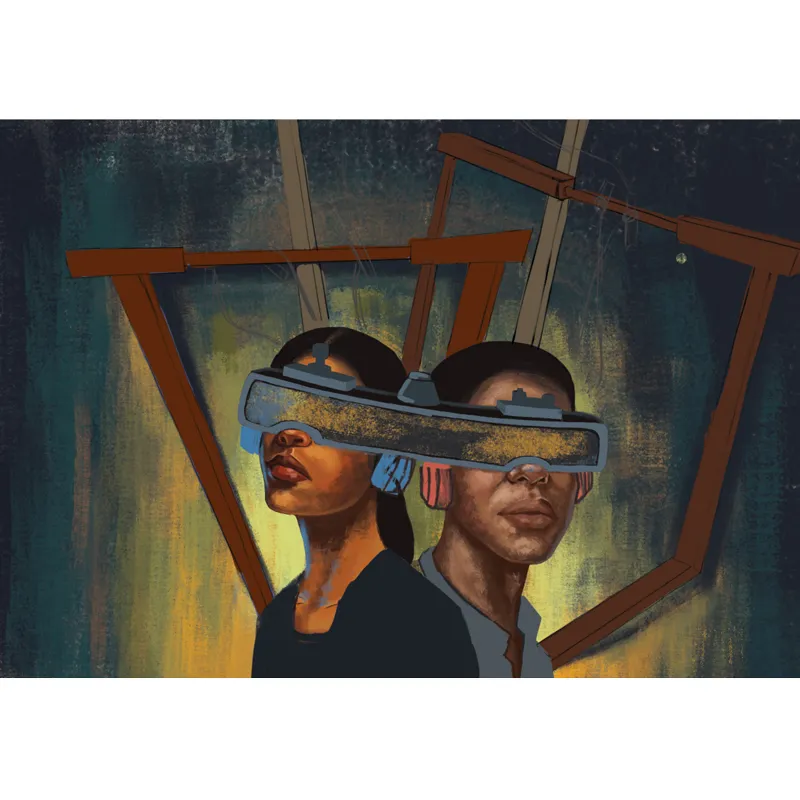
Captivity (Kegnt) is a series exploring how young people navigate digital environments while carrying subconscious histories shaped by past experiences. The figures exist in the present, yet their perception is mediated through digital devices, symbolizing how online spaces merge with memory, trauma, culture, and learned behavior.
The work suggests that digital platforms do not shape identity alone; they interact with what already exists beneath the surface. Past experiences influence how young people seek connection, validation, and belonging online, while digital systems amplify these patterns, affecting emotional and mental well-being. Wires, structures, and wearable technologies represent invisible forces -- memory, algorithms, social pressure, and constant connectivity -- quietly guiding thought and behavior.
Kegnt highlights the tension between connection and captivity in digital life, inviting reflection on awareness, agency, and the possibility of reclaiming balance by understanding both digital environments and the subconscious histories we carry into them.
Eyob Tadesse
Ethiopia • 25-30 y/o • ♂
Our Winners
Meet the three awarded artworks, recognized by our international jury for their originality, authenticity and powerful storytelling.
The Tree That Never Slept
Anukriti S.
Funny Faces
Ada H.
Captivity (Kegnt)
Eyob Tadesse
Striving for balance
A Space of My Own
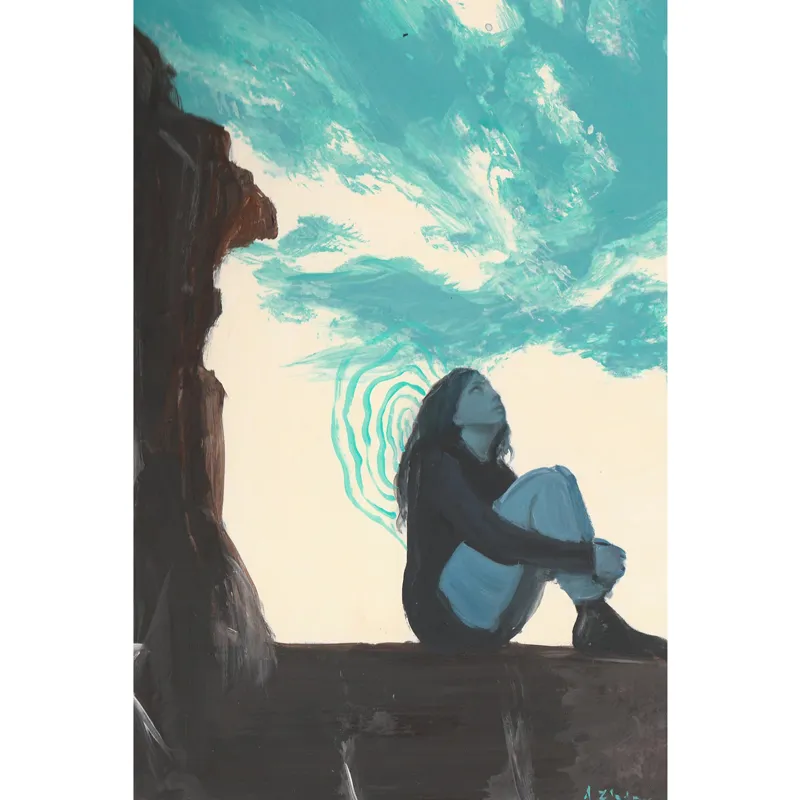
These autoethnographic paintings stage an investigation into our adoration of, and complex relationships with, the digital space. It is one that promises recognition, validation, and transcendence through metrics such as likes, views, and followers. We see the benefits of a platform that can give voice to the many who are neglected.
The other aspect I try to highlight is how we find online spaces to be spaces for self-expression and exploration. However, my work highlights how we, as contemporary patrons, seek social media platforms to create and curate our identities according to certain values, allowing the algorithm to define ourselves and our content.
Ally Zlatar
Scotland • 25-30 y/o • ♀
Self image and well-being
When Screens Affect Heartbeats
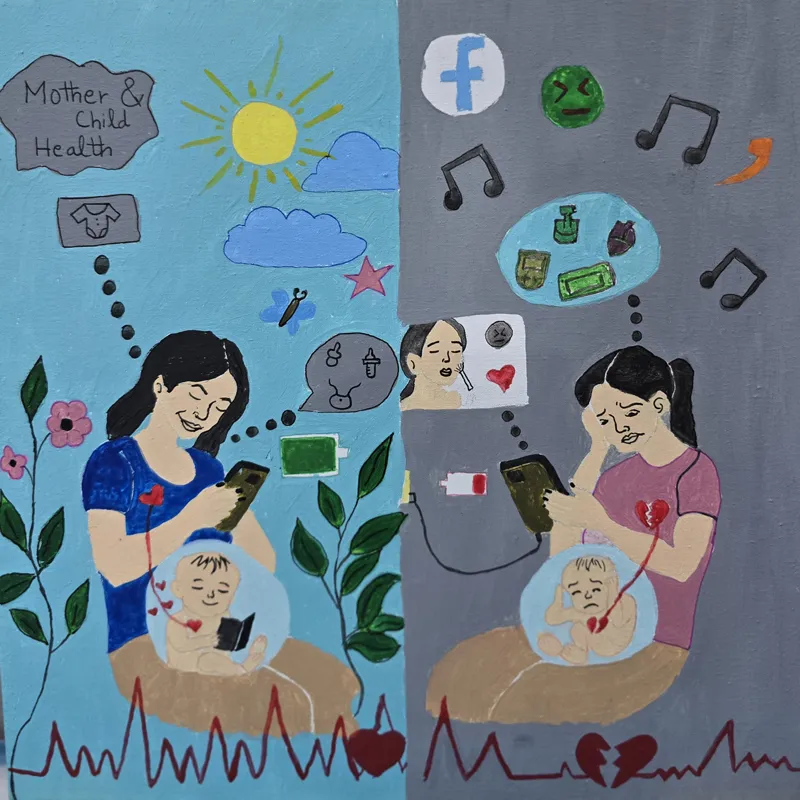
This artwork tells my real story. During my pregnancy, I realized how the way I spend time online can affect my awareness of my own health and the life growing inside me. On one side, I use the internet to learn about maternal and child health, and the baby’s heartbeat is strong and steady. It represents how digital spaces can support knowledge, care, and healthy choices. On the other side, I am distracted by social media, music, and entertainment, and the baby’s heartbeat becomes weaker. This side reflects how easily we can lose focus in the digital world.
Through this piece, I share my personal reflection that screens are powerful. They can guide us toward better health or quietly take our attention away from what matters most. For me, being online is about choosing awareness, balance, and care for myself and my baby.
Amna Arif
Pakistan • 25-30 y/o • ♀
Identity, privacy and belonging
Good Listener
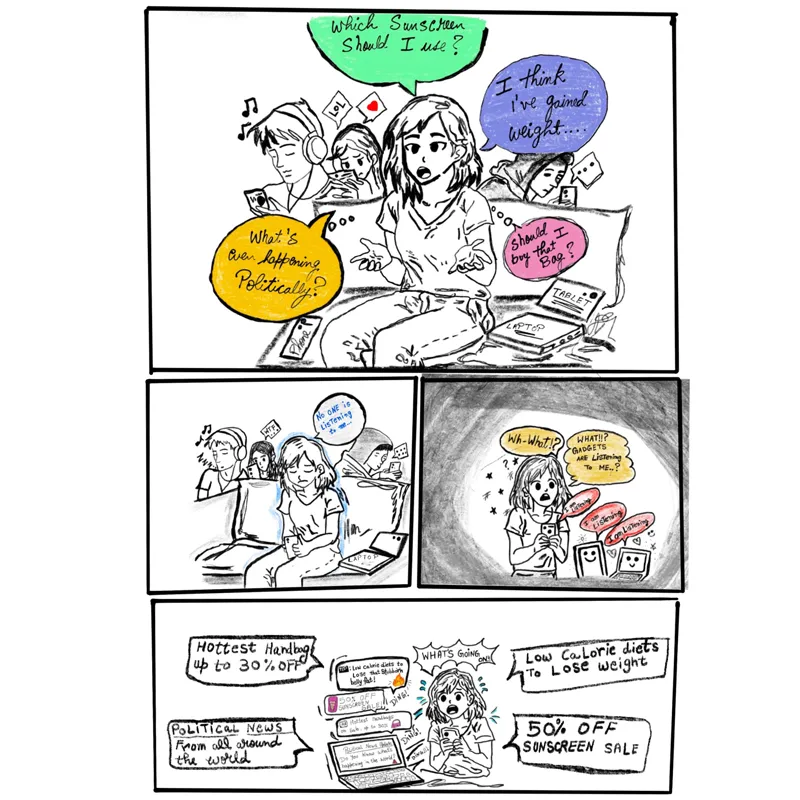
This artwork explores how digital devices constantly listen, observe, and respond to our everyday conversations. In the first frame, the girl shares her thoughts and concerns, but the people around her remain absorbed in their own gadgets, highlighting emotional disconnection. As she continues speaking, no one responds, and she gradually falls silent, feeling unheard and isolated. However, in the following frames, the gadgets around her begin to “listen,” symbolising how devices capture even casual conversations. This is further emphasized in the final frame, where her spoken thoughts reappear as targeted advertisements—about weight loss, sunscreen, handbags, and news—demonstrating how algorithms process and respond to personal data. The artwork reflects the idea of surveillance in the digital age, where technology listens more attentively than people. It highlights a paradox: while human connections weaken, machines become more responsive, raising concerns about privacy, data tracking, and how deeply technology understands our lives.
Ashu Choudhry
India • 25-30 y/o • ♀
Between digital and physical worlds
İki Dünya Arasında (Between Two Worlds)
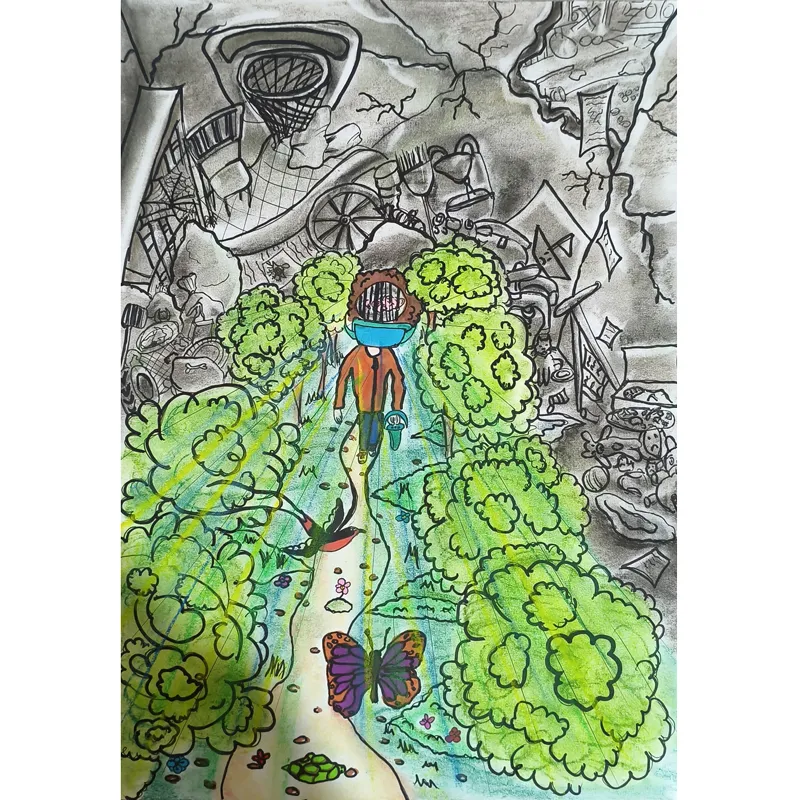
In this drawing, I wanted to show that the digital world can be both very colorful and sometimes quite exhausting. The gray and cluttered area at the top represents the endless piles of information and digital overload found within screens. Everything there is so fast and complex, which is why I wore a mask to protect myself. The flowery green path at the bottom is my physical world; it represents nature, breathing, and peace. When I disconnect and step away from the online world, I enter this colorful path. For me, the most important part of growing up in a digital world is finding the balance between these two worlds and knowing when to take a break.
Ayaz Metin
Türkiye • 9-13 y/o • ♂
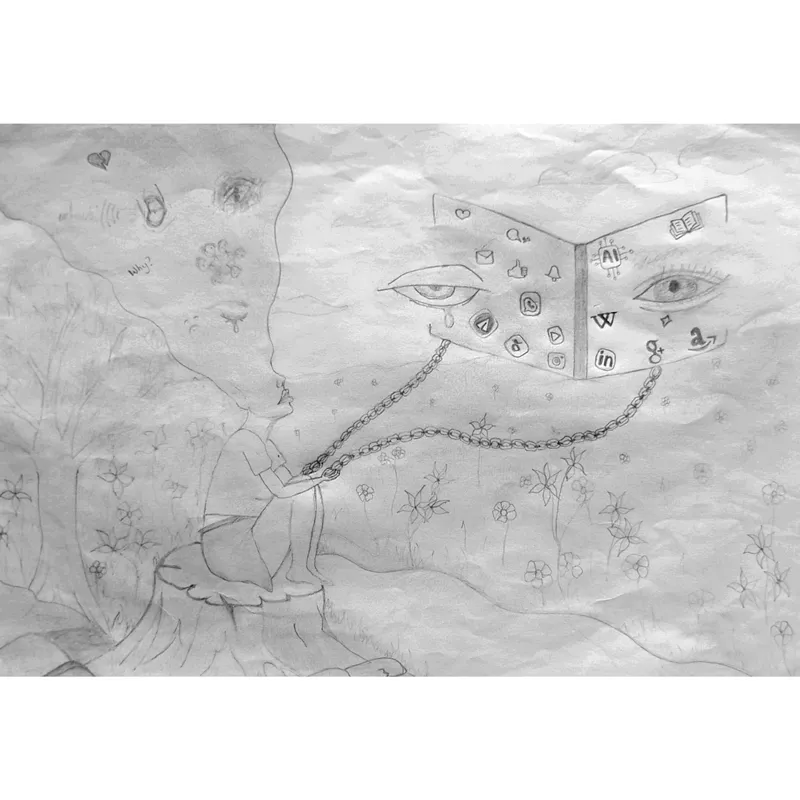
Between digital and physical worlds
Internet, It Helps and Distracts
The girl sits on a tree stump, surrounded by flowers, trees, and a river. This represents our physical world, the environment that surrounds us when we ignore it.
Her eyes are fixed on the screen before her. The internet is split into two. One side is bright, the side of productivity. It helps her learn, work, and do research.
The other side is dark, filled with constant notifications, messages, noise, endless distraction and weary eyes. This side pulls her closer.
Chains stretch from her hands to the screen. She is not bound to it, but she's holding it.
Her mind is full of questions:
Am I doing the right thing?
If I let go, will I lose what benefits me?
Inside, she is tired. She is screaming, but no one hears her.
Beauty Anthony
Nigeria • 14-18 y/o • ♀
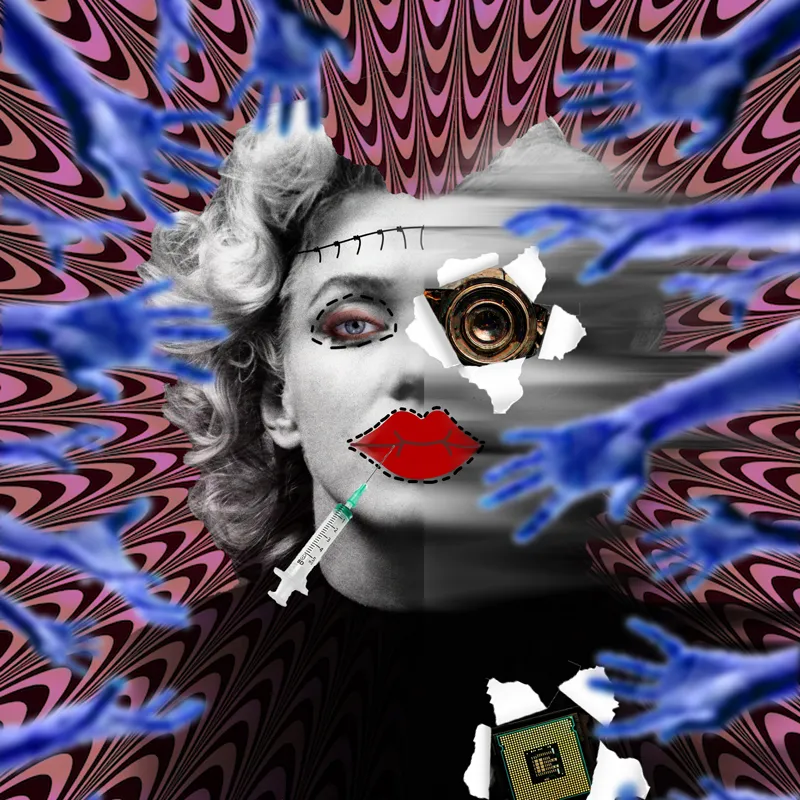
Self image and well-being
Consumed
Consumed is about the effect of social media on our minds in uncomfortable ways, including our perceptions of ourselves, beauty, and reality. It is centered around Marilyn Monroe’s iconic face to show the space between classic and new perceptions of beauty and how they are constantly evolving and growing.
The focus on the lips and the eye represents the growing influence of beauty standards, while the syringe represents the influence of trends, even if they are bad, and the attempt to fit in. The torn mechanical eye and the broken facial parts represent the growing control of artificial intelligence and the internet on the human mind. The optical illusion in the background represents the false world of perfection and illusion created by the internet. The hands represent the judgment and influence of the outside world, including society, on our self-perception. Finally, the microchip replacing the heart represents the growing control of technology on our feelings and true human interactions.
Bemnet Meaza
Ethiopia • 19-24 y/o • ♀
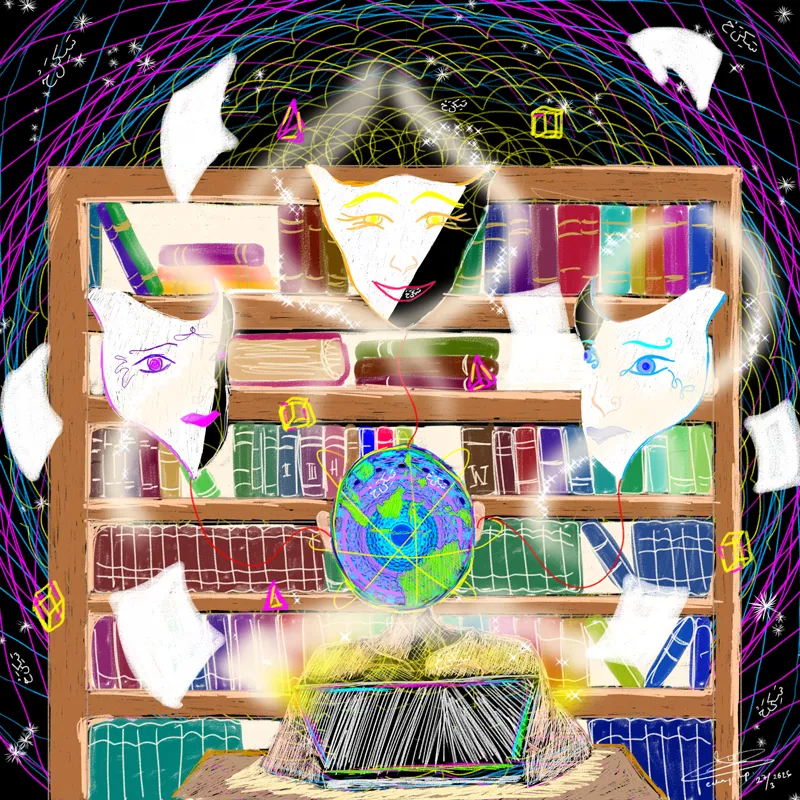
Between digital and physical worlds
Digital Human
In today’s digital era, people can easily access any information and build relationships without meeting face-to-face. Digitalisation offers many conveniences, but it also brings happiness, anxiety and sadness—emotions that are inseparable from human nature and are now unrestricted by the boundaries of space and time.
The credibility of the information we receive sometimes makes us forget that there is a "Book" that serves as a benchmark for the various digital information we receive. There is a need for safeguards for mental health.
Human mental health and well-being are now being questioned: do they heal, or do they actually cause harm?
Therefore, the trust taught in Indonesian culture towards God serve as a means of self-control. "سكنح” or "Sakinah" means tranquillity; in Islam, it is believed that God is the bringer of tranquillity for His servants, so the balance between digitalisation, humanity, and faith becomes a key element for digital well-being.
Cahaya Listian Putri
Indonesia • 19-24 y/o • ♀
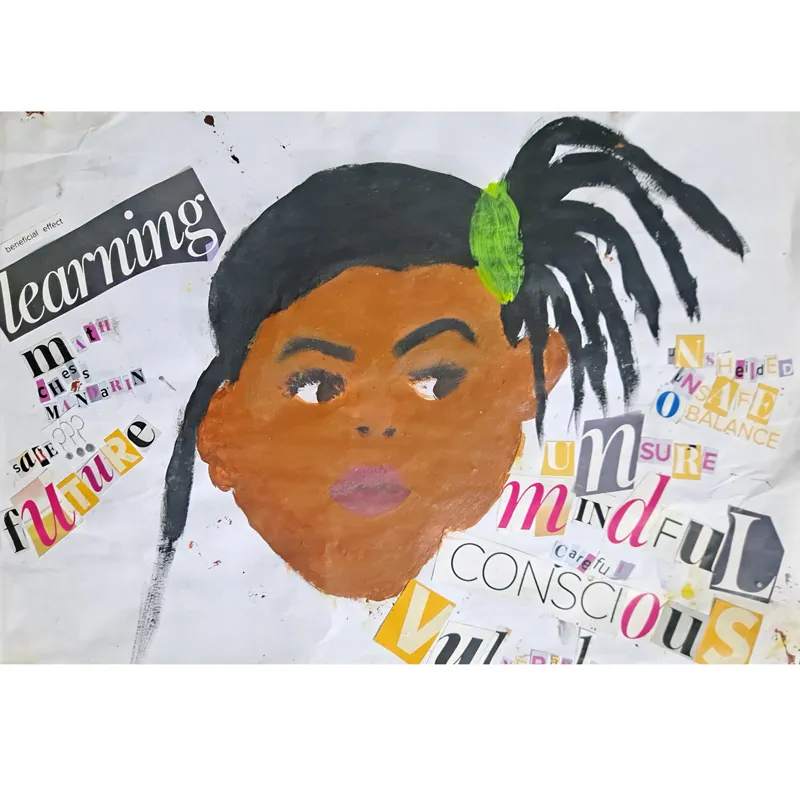
Identity, privacy and belonging
Online Feel
My artwork is a picture showing how I feel and what I think of when I think of being online. The connection and disconnection come when I am on an educational site and unwanted pictures, pop-ups and sites that are disguised as something that they are not, come up. This is the main part that makes me feel vulnerable, unsafe and unshielded online.
Char
9-13 y/o • ♀
Between digital and physical worlds
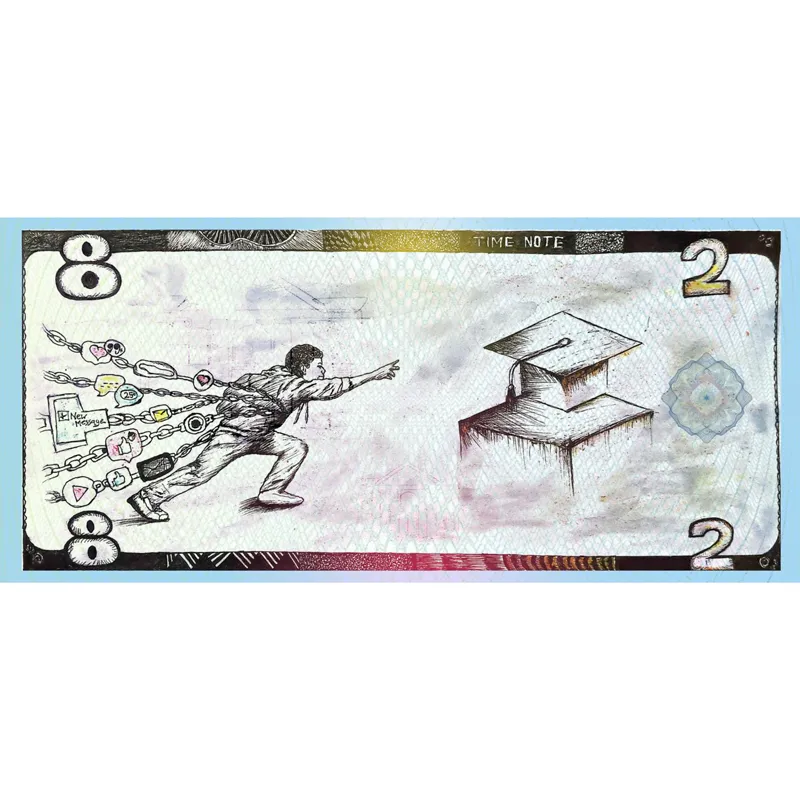
THE COST OF SCROLLING
This artwork explores what being online feels like as a young person, using the concept of time as currency. It depicts a boy reaching toward his goals while being held back by chains made of social media elements, symbolizing the mental and emotional weight of constant digital engagement. The contrast between time spent online and time used purposefully highlights how digital environments can influence focus, well-being, and personal growth.
Damilola Kayode
Nigeria • 25-30 y/o • ♂
Digital overload and disconnection
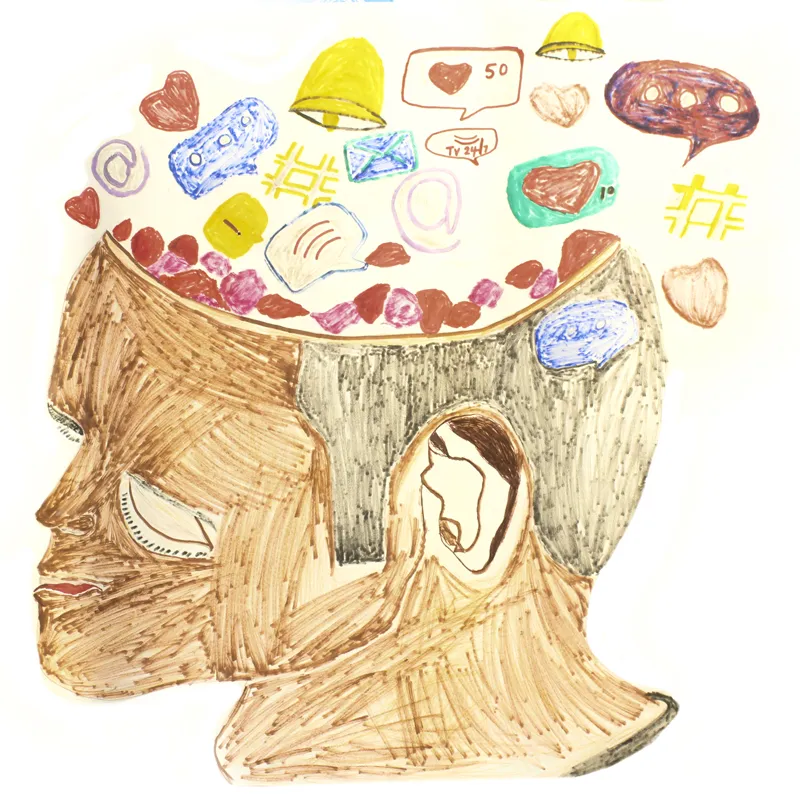
Mental Storm Online
The artwork shows the overwhelming impact of constant online activity on mental health. The open head represents the human mind, filled with notifications, messages, likes, emails, news alerts, and hashtags that spill out like a storm. These symbols reflect the endless flow of digital information people face every day. The crowded icons show how being constantly connected can create pressure, anxiety, and mental exhaustion. Through this piece, I explore how the digital world, while connecting us, can also overwhelm the mind and disturb our inner balance.
Dieudonne Idam Eze
Russia • 25-30 y/o • ♂
Self image and well-being
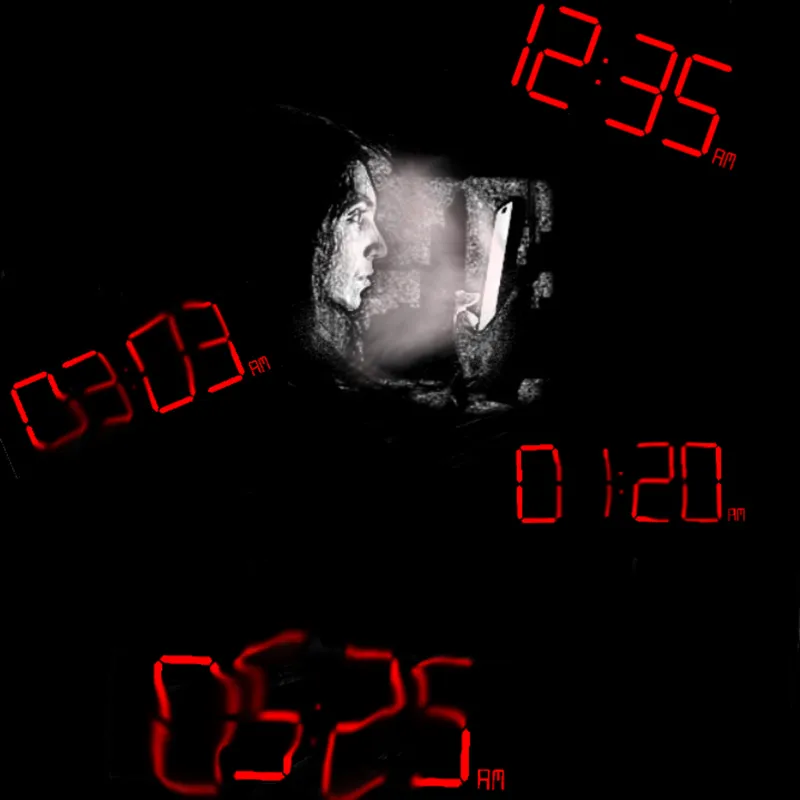
Digital Insomnia: Sleepless but Online
It depicts how being online has become an addiction to the point of causing insomnia that affects our health. With the excuse of "just one more hour," people find themselves being online for prolonged periods, especially at nights.
Elio Rrapi
Albania • 25-30 y/o • ♂
Striving for balance
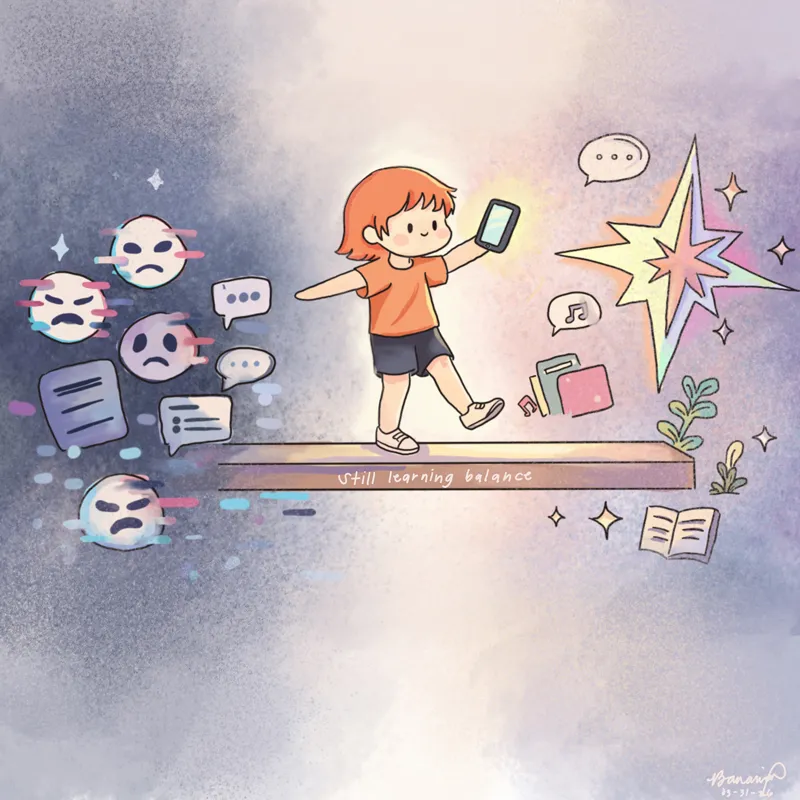
Still Learning Balance
Being online is not a single feeling. It is many feelings existing all at once. This piece captures that tension: a child walks forward, holding a phone toward a bright, hopeful side filled with books, music, growth, and connection, while behind her, a darker space swirls with angry faces, glitching screens, and overwhelming noise. She is not running from either side. She is simply walking, arms outstretched, trying to find balance on a surface that holds both worlds. Growing up digital means navigating identity, relationships, and well-being in a space that never fully turns off. There is a beauty in it, and there is weight in it too. Neither side is the whole truth. The caption beneath her says it best: still learning balance. Because that is exactly what it is. Not a destination, but an ongoing, honest process that most youth today know deeply and personally.
Eunice Jane Bnawan
Philippines • 19-24 y/o • ♀
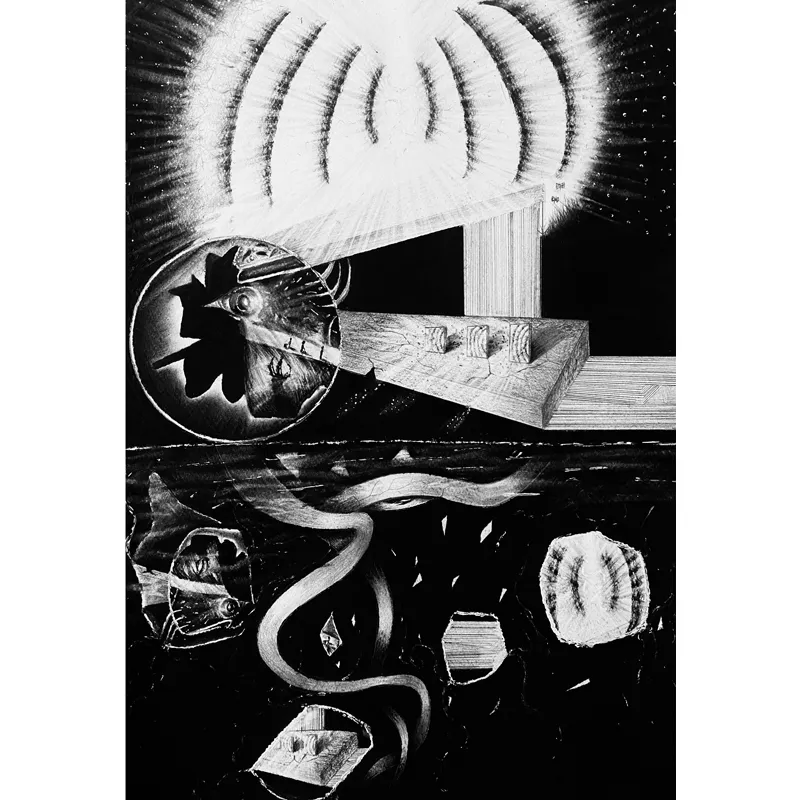
Digital overload and disconnection
Time Dilation
Time Dilation is a surrealistic approach which represents the slow passage of time at very high speeds in relation to the speed of light. While we are engulfed in the digital world, we tend to lose track of the passage of time as the phones keep us in a loop. Distortions occur in several patches in our subconscious. We become hyper-aware, we over-stimulate, all in the effort of making connections.
Favor Leo
Nigeria • 19-24 y/o • ♂
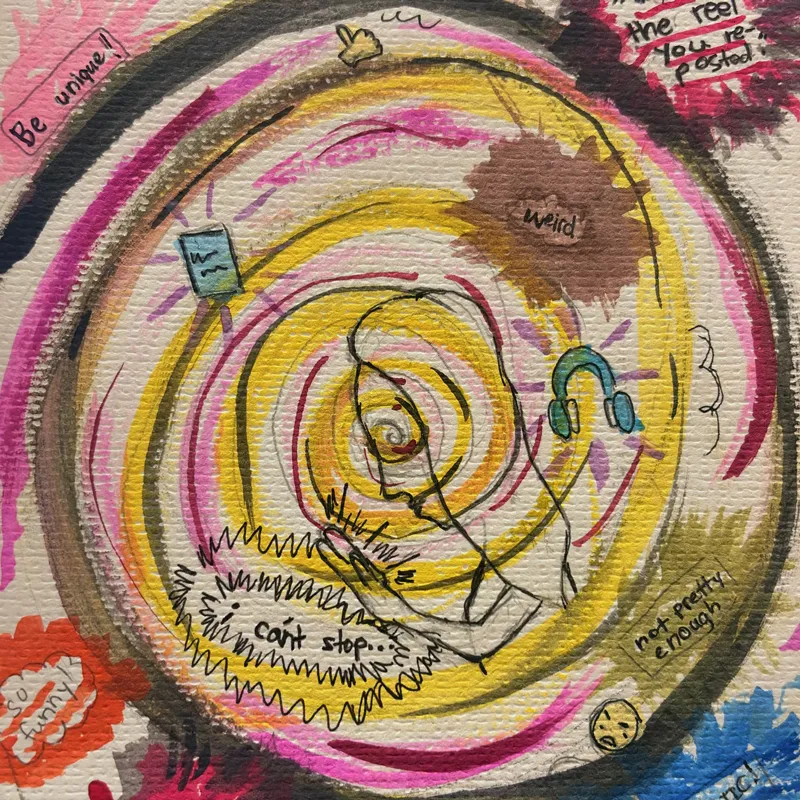
Self image and well-being
Spiraling Through a Digital Playground
When I was making this artwork, I made it as personal as possible. The spiral represents the way I feel when I use my gadget. Like I'm falling into a never-ending pit filled with sounds and light. The bursts of colour represent the way I feel when I see those specific words. When the internet says I'm not pretty, I feel jealous of everyone who is pretty, or at least to the internet's standards. But I feel happy whenever the internet recommends me a new book or a new song. There are so many positive things on the internet, but there are also many negative things as well. I'm in the middle, my head hurts, and so do my eyes, but I keep on watching. I feel like a deer looking at headlights, transfixed. I know where left and right are, but I just can't stop staring.
Frances Simone Morillo
Philippines • 9-13 y/o • ♀
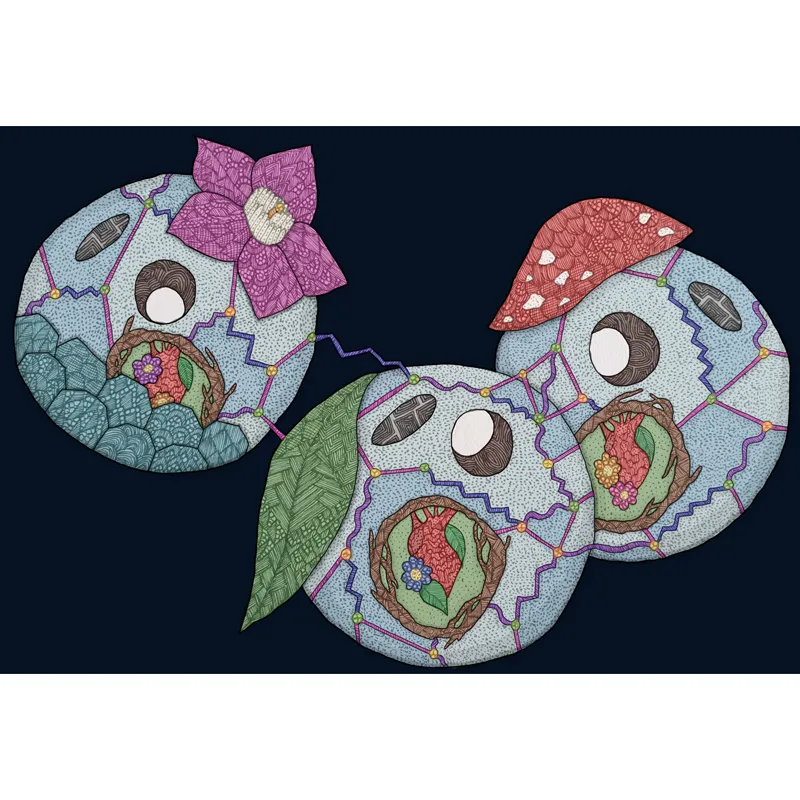
Identity, privacy and belonging
Nested Signals
Nested Signals explores connection, disconnection, and the importance of preserving emotional well-being online. It portrays three bubbles representing humans, each crowned with a different natural element (a leaf, a flower, and a mushroom) to symbolize individuality, growth, and diversity. Their bodies are crossed by colorful lines and nodes that represent the social networks we move through online. Some lines are straight, some zigzag, and some wavy, reflecting how digital connections can feel supportive, complicated, or unstable. The QR code elements on their heads suggest how online identity can make us visible, searchable, and constantly connected. One figure is partially blocked by a wall, showing that some people remain isolated even within a hyperconnected world. At the center of each figure, the heart and organic forms remain protected, reminding us that beneath digital interactions, each person carries an inner self that deserves care.
Gabriela Padilla
Ecuador • 19-24 y/o • ♀
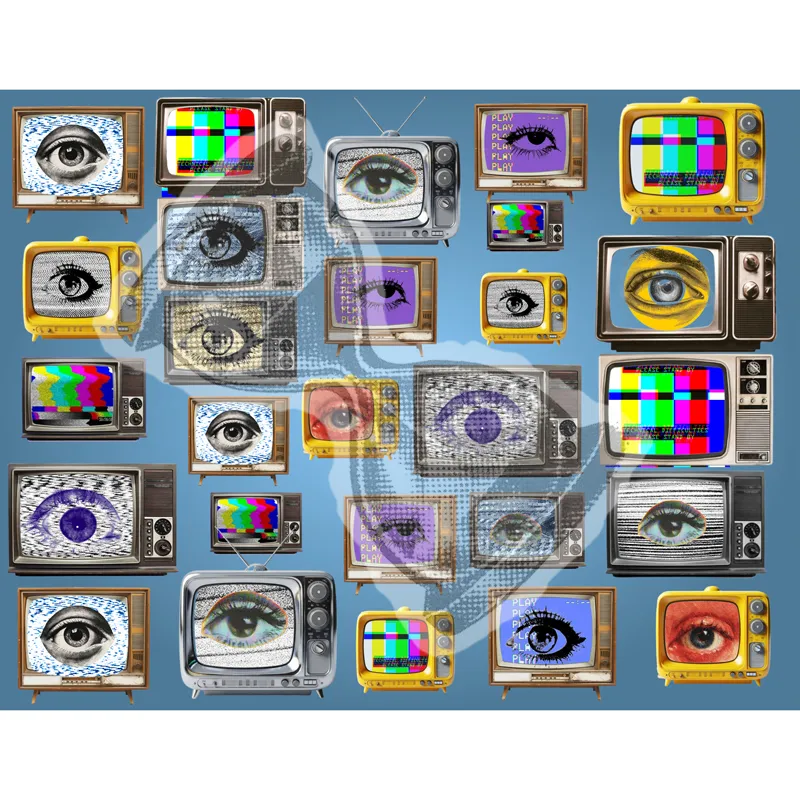
Digital overload and disconnection
Chained to the Algorithm
“Chained to the Algorithm” explores the surveillance culture of our digital lives. Using the glitchy aesthetic of vintage televisions, the work contrasts the nostalgia of early broadcasting with the intensity of today’s algorithm-driven platforms. The repeating eyes represent the feeling of constantly watching and being watched, turning everyday online expression into a performance for an invisible audience.
At the centre of the composition is an hourglass, symbolising how time slowly drains away during endless cycles of scrolling and engagement. The static screens and “technical difficulty” imagery represent the mental noise and fragmentation created by constant digital stimulation.
While the internet promises connection, it can also produce a quiet sense of isolation. This piece reflects on the tension between visibility and privacy and the exhaustion of being tethered to digital systems that constantly compete for our attention and shape how we experience ourselves online.
Gift Wamatuba
Kenya • 25-30 y/o • ♀
Striving for balance
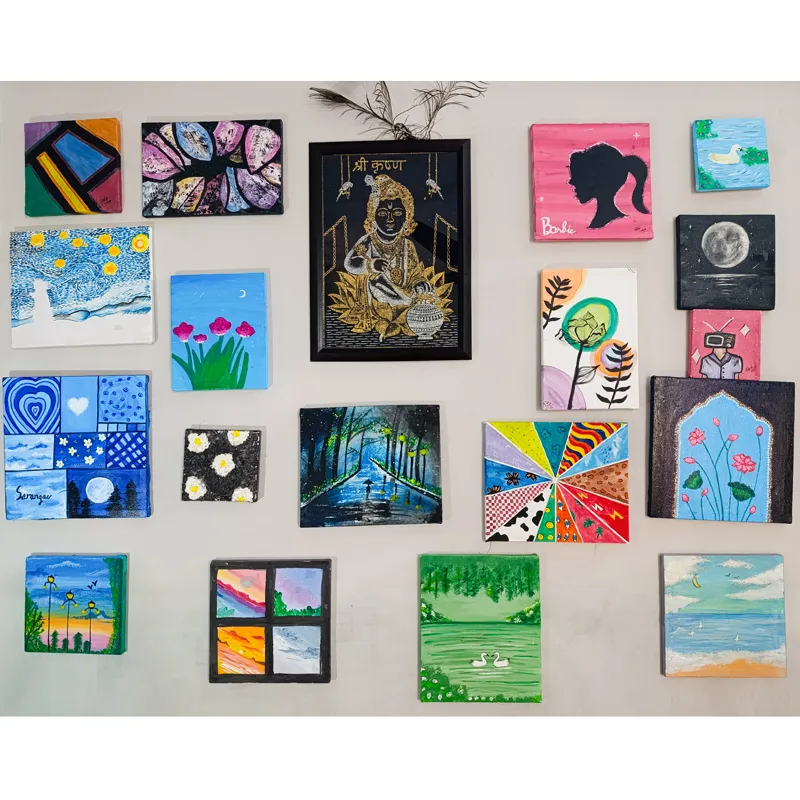
The Wall Behind the Screen
Whenever my phone feels too loud or I get tired of scrolling, I come to this wall. I am fourteen, and sometimes the digital world feels like it is everywhere. These paintings are my way of taking a breath. Every little canvas is a time I put my phone away to pick up a brush instead.
I wanted to show my whole wall because this is my safe space. It is where I go to feel calm and be myself. To me, digital well-being means having a place in the real world where you can just create and be happy without needing a screen.
Hetal Kumari
Pakistan • 14-18 y/o • ♀
Between digital and physical worlds
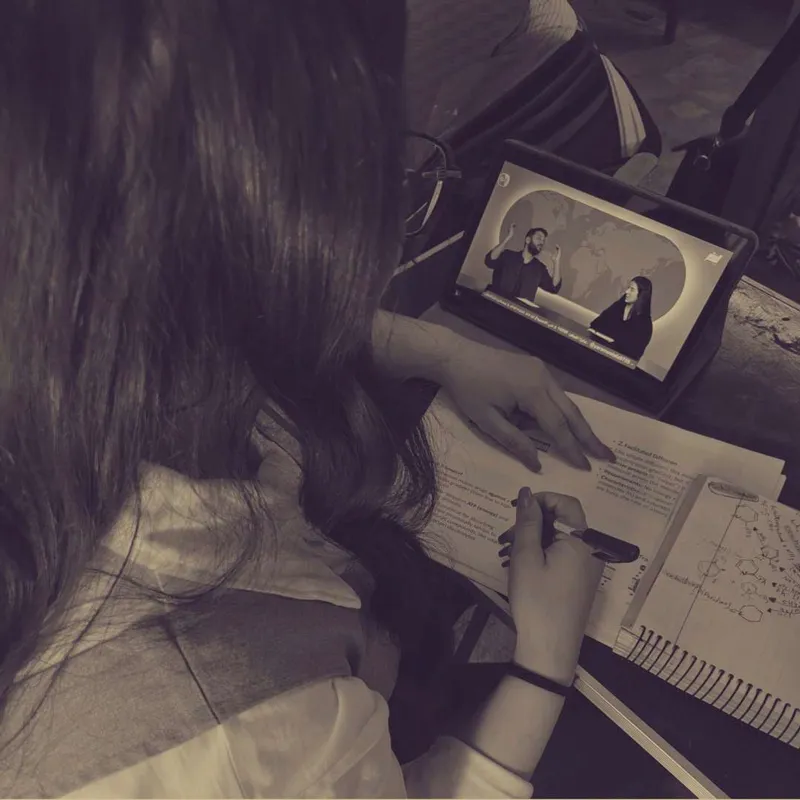
Divided Attention
This image reflects how digital life silently takes over our time, even in moments that require full focus like studying. While trying to learn, the screen becomes an unavoidable distraction, dividing attention between real effort and passive consumption. What inspired me is how normal this scene has become; we no longer question the presence of devices in every detail of our day. Yet, this constant interference affects not only our productivity but also the quality of our understanding and concentration. The idea behind this photo is to highlight that the issue is not technology itself, but how deeply it controls our habits. It’s a reminder that reclaiming focus is essential if we truly want to learn, grow, and be present in our own lives.
Jena Nemr
Egypt • 19-24 y/o • ♀
Striving for balance
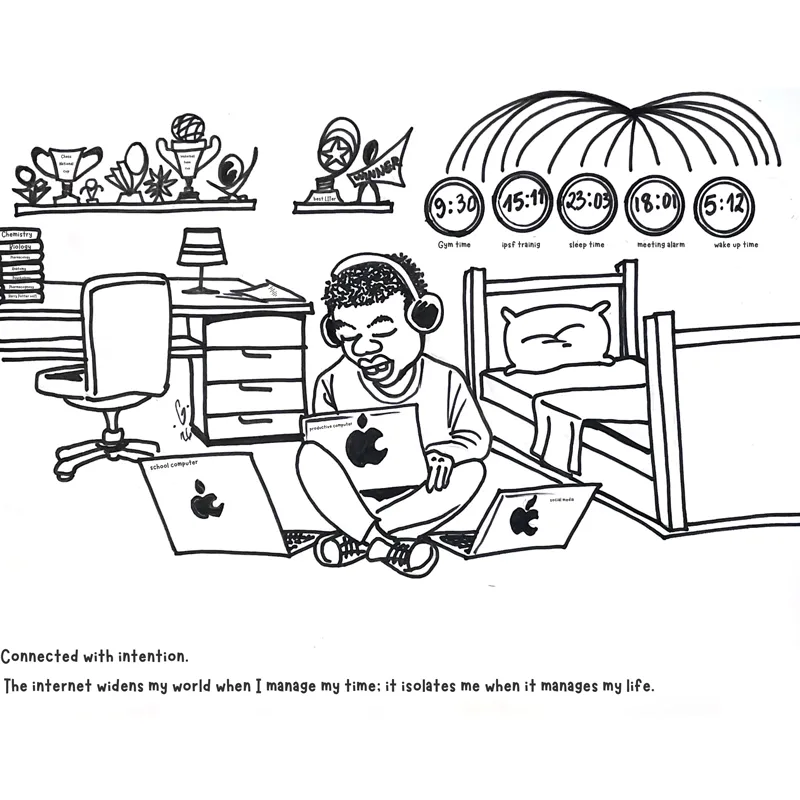
Connected with Intention
This drawing represents 30% of my life: me in my room, surrounded by my screens; a laptop, a tablet, and a phone, all connected to the internet. These devices are for my classes, trainings, tasks, and for keeping in touch with friends I met in real life.
I am organized: the clocks on the wall mark the exact times for sport, training sessions, meetings, and sleep. My shelves hold trophies, one for sports and games, the other for community and training awards, proof that I succeed both online and offline.
Answer to the Question: Is the Internet Helping Me or Distracting Me?
The internet can both help and distract me.
When I use it with a clear schedule and a purpose, it opens doors: learning, connections, opportunities, and leadership. Without rules or limits, it can pull me away from the physical world, stealing time from sport, friends, and the moments that build my real life.
Ultimately, it’s not the tool that decides, it’s how I use it. My discipline and planning turn screens into levers for growth; lack of limits turns them into traps.
Zoom in to read the small notes and labels, they matter. The tiny writings on the screens, clocks, and trophies add context and intention: they show that every minute and every device has a purpose.
Joseph Desire Nkuitchou Kengne
Burkina Faso • 25-30 y/o • ♂
Identity, privacy and belonging
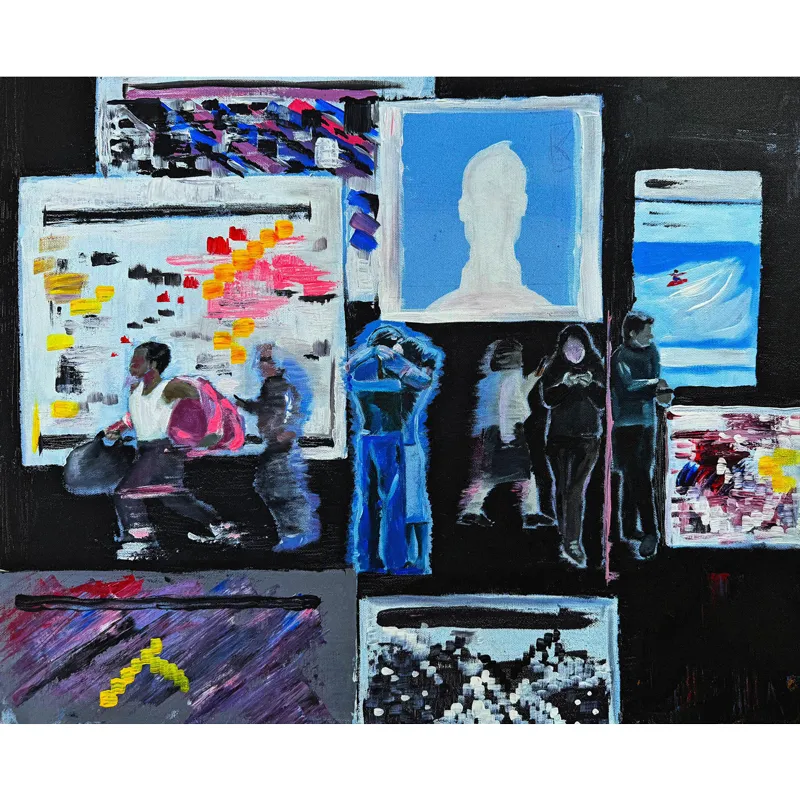
Analog Hearts in a Digital World
We are not built for this much noise. We weren’t made for endless options, comparisons, or constant windows into lives that aren’t ours. I wake up and before my feet hit the ground, I’ve already been measured—someone richer, happier, more viral—and suddenly my quiet morning feels less.
We are analog hearts in a digital world. We confuse visibility with value, engagement with connection, speed with progress. We scroll past suffering in seconds, brand our pain, optimize our personalities, perform healing instead of living it.
Strangest of all, we’ve never been more connected, yet loneliness feels industrial—because attention is not intimacy, metrics are not meaning, and algorithms don’t love you back.
The struggle isn’t surviving technology, but remembering you are not content, a feed, or a number—just a human trying to feel safe.
Maybe rebellion isn’t louder posting, but logging off to hear yourself without an audience, being human without performance.
Joshua Efemuaye
Nigeria • 19-24 y/o • ♂
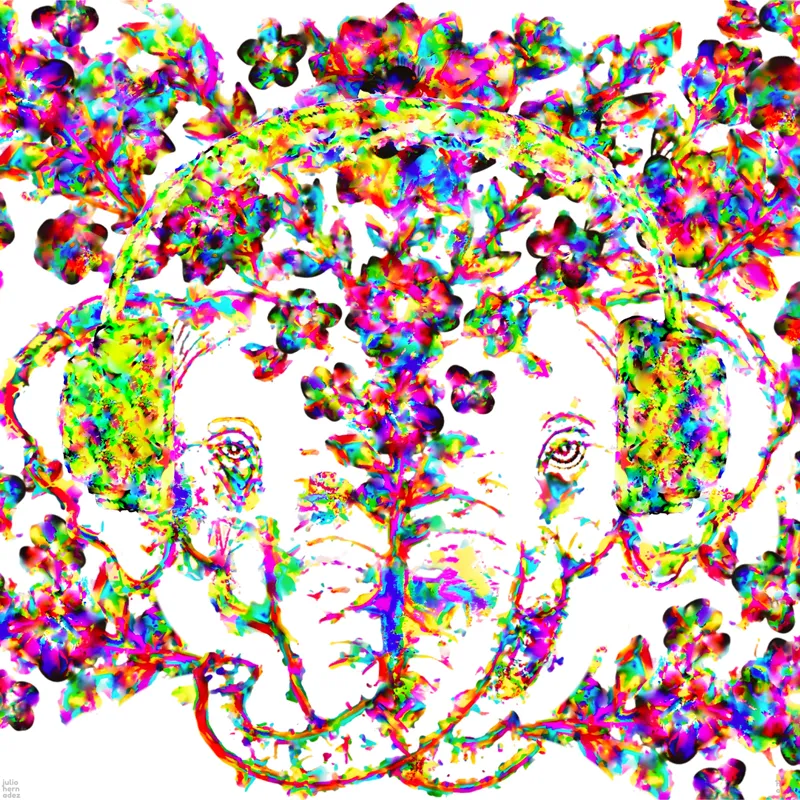
Connection, friendship and support online
Connected, We Thrive!
The Bluetooth headphones symbolize not only connectivity but also support and friendship in a conceptual way, merging these ideas into a single entity that both can rely on. Initially sketched individually to highlight the Bluetooth functionality, combining the entire concept into one element better conveys the message, with the flowers emerging from their trunks representing the relief we feel when we finally connect with a significant other, allowing us to be ourselves and share our feelings, achievements, and challenges, and overall show support.
I wanted to materialize digital well-being in a very colorful and commercial way but at the same time keep my signature technique and a kind of poetic approach. As an environmental artist, I always love to include nature, elephants as a continental symbol, and Peruvian flowers that are very characteristic for their strong fuchsias as an intercultural ode to connectivity and friendship.
Julio Hernandez
Peru • 25-30 y/o • ♂
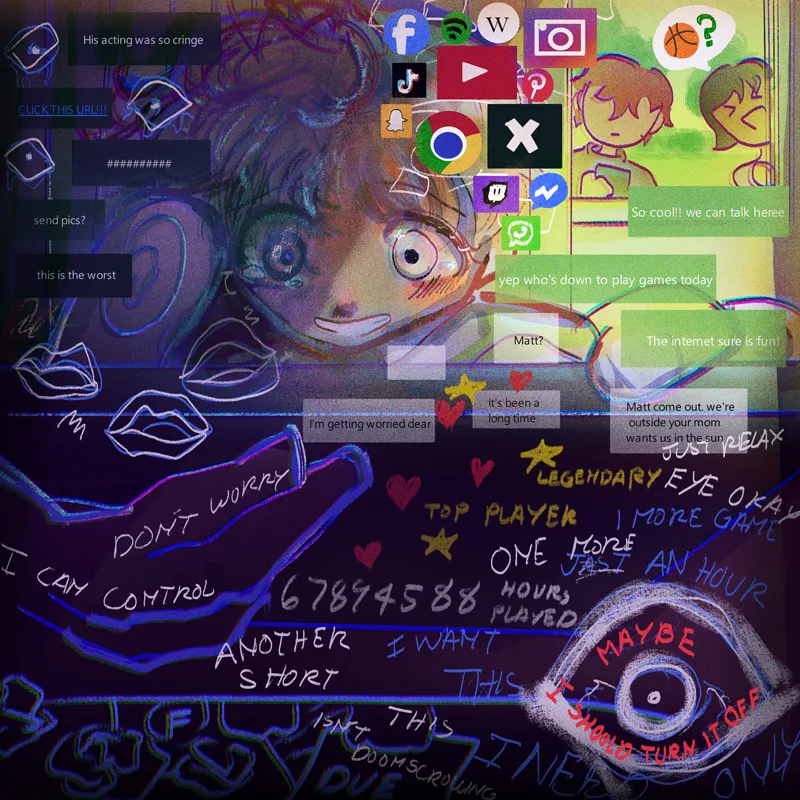
Digital overload and disconnection
TURN IT OFF
"TURN IT OFF" depicts the overloaded turmoil of a child as he explores the internet and digital community. At the start, little Matt had fun playing online games— ecstatic to be able to chat with long-distance friends and happy given the endless stream of digital sites. Like every child, he was a young curiosity ready for new knowledge. However, as time went on, he became attached to his favorite games and through his endless searching, spotted some things not meant for his eyes— media, photos, language, and all the worst comments. There was harmful misinformation, addiction, and bombardment of advertisements, especially on today's sites— little Matt wasn’t taught how to handle the overload of information.
Yet, when everything seems too much, when your friends and family are worried, when your eyes turn red and your head starts to hurt, you should remember: just TURN IT OFF.
Mariel Seville
Philippines • 14-18 y/o • ♀
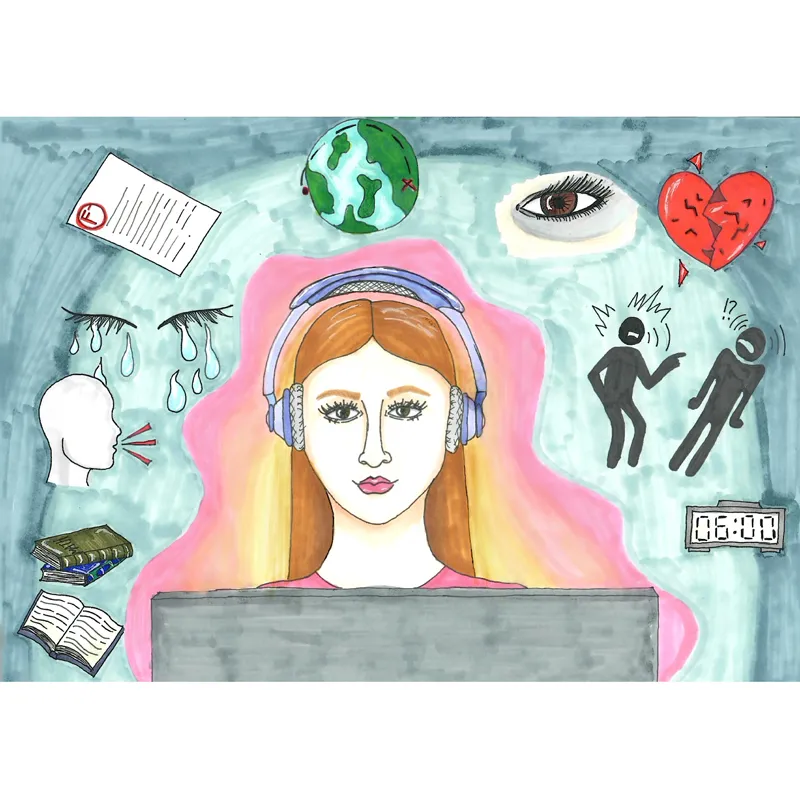
Emotions online
My 15 y.o Feeling
While creating this work, I wanted to convey the positive emotions I experience when I am online. After a long and exhausting school day, when I return home, the only kind of rest that truly helps me relax and relieve stress and fatigue is watching my favorite TV shows, as well as using social media to communicate with friends, browse news feeds, and listen to music.
This kind of pastime brings me a sense of peace, happiness, and calm. Throughout the day, I look forward to this special time in the evening. It feels like it protects me from my problems, worries, and negative emotions.
At such moments, I feel as if I am in another world, one that is created just for me, and I truly enjoy it.
Mariia Kaminska
Cyprus • 14-18 y/o • ♀
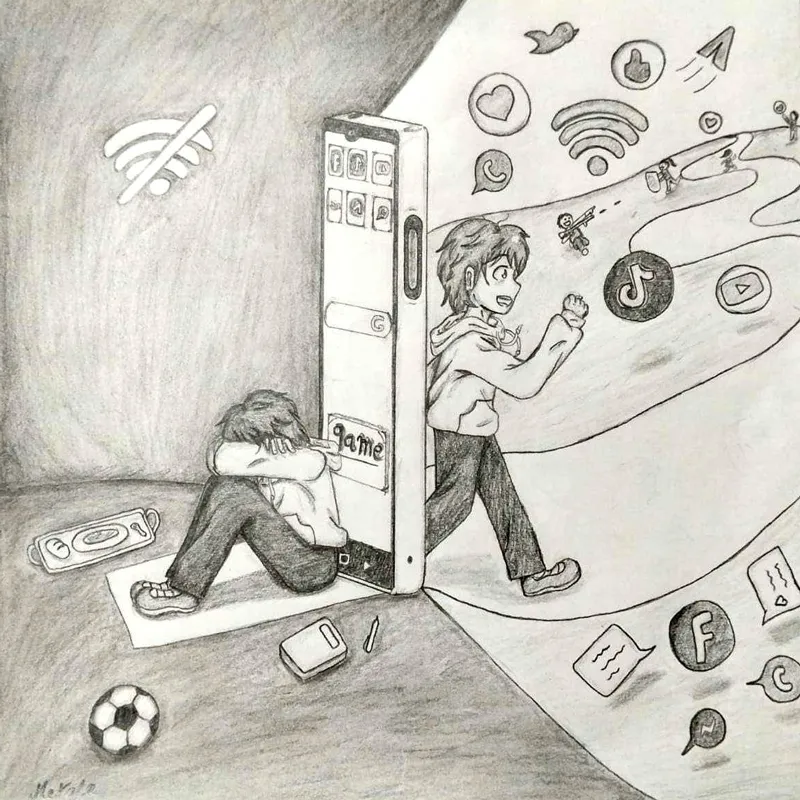
Between digital and physical worlds
Another World
This art represents the sharp division between digital presence and physical reality. The smartphone acts as a barrier, splitting an individual into two different worlds. On the right, the character appears active, surrounded by social media icons like TikTok and Facebook, symbolizing a vibrant virtual life. However, the left side, shows the real world, the person sits in shadows, feeling isolated and depressed. Neglected hobbies, such as a soccer ball and a book, indicate how the digital world can replace real-life activities. The "No Wi-Fi" symbol further emphasizes a state of emptiness when the connection is lost. This drawing serves as a reminder that while technology connects us to a global "world," it can often lead to profound loneliness in our actual surroundings.
In conclusion, through this humble drawing, I hope we remain aware of how the internet and technology impact our lives. They can be a source of progress and development, but they can also lead to decline and destruction.
Merola Ehab
Egypt • 19-24 y/o • ♀
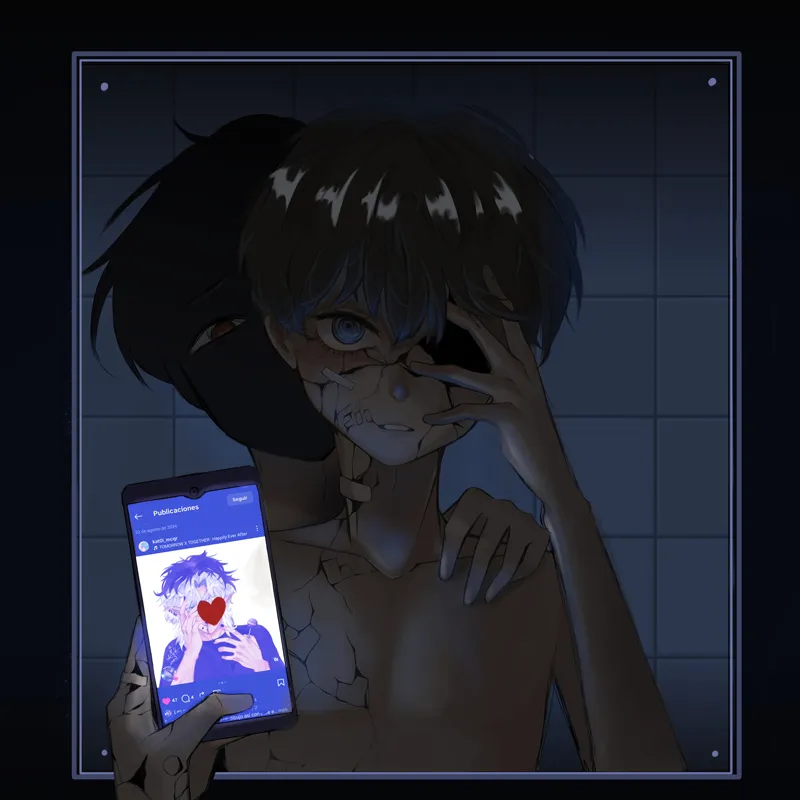
Self image and well-being
A la altura de nadie
Being online can be entertaining and appealing, but it often leads to constant comparisons with others. This work represents the cracks in a young man’s skin. Upon observing himself, he realizes he doesn’t measure up to the standards of the people he encounters online. The cracks in his skin symbolize the insecurities that arise from this comparison, invisible wounds that intensify in a cold and distant environment. It shows how digital validation can transform self-perception to the point of fragmenting identity.
Mikaela Quiroz
Ecuador • 19-24 y/o • ♀
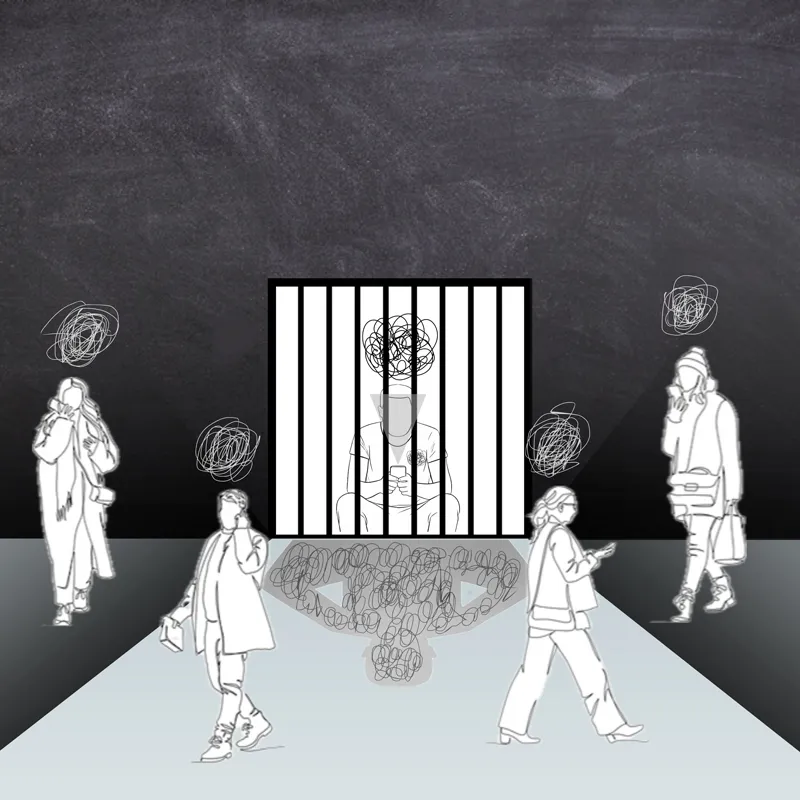
Identity, privacy and belonging
The Weight of Being Online
Being online pulls me into a digital cage, an endless interaction with content and with people whose complexities often do not mirror my own. There are people everywhere, voices abundant, yet trust feels distant. Their fragmented selves, their curated lives, their emotional echoes seep into me. Over time, this constant exposure is reshaping my psyche and emotions, and the colors of natural life have seemingly been lost. This whole process is subtly metamorphosing who I am, sometimes without my consent.
Mohammed Ahmed
India • 25-30 y/o • ♂
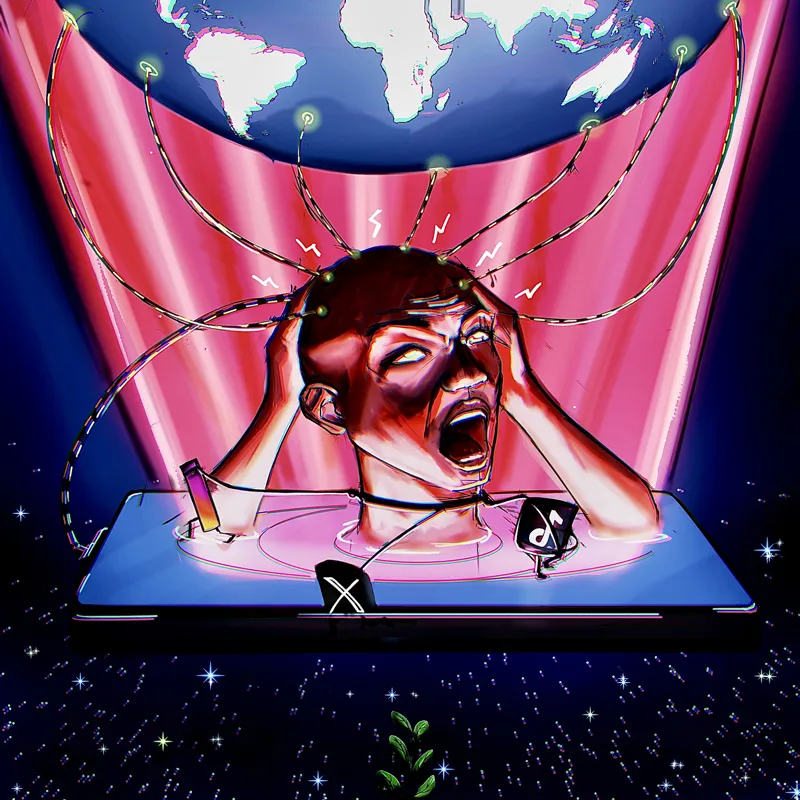
Digital overload and disconnection
A Mind Under Siege
A Mind Under Siege was inspired by my experience as a teenager who had just gotten a phone after completing his secondary school education, and how I dealt with this overload.
This piece captures how connectivity in this digital age can come with the cost of intrusion, fragment the young adult's self.
The illustration portrays a young adult's head unto which a digital phone and "the world" are connected. On his neck are icons symbolising social media apps like Instagram, TikTok and Twitter, which imply a digital chokehold, limiting peace of mind, and also serving as a source of pressure. He also appears to be slowly drowning into the phone, and is with a strained expression.
Just at the opposite axis of the phone is a still and silent space with a plant. This symbolises a reset that comes with turning the phone down and reconnecting with nature.
Moyinoluwa Ajayi
Nigeria • 19-24 y/o • ♂
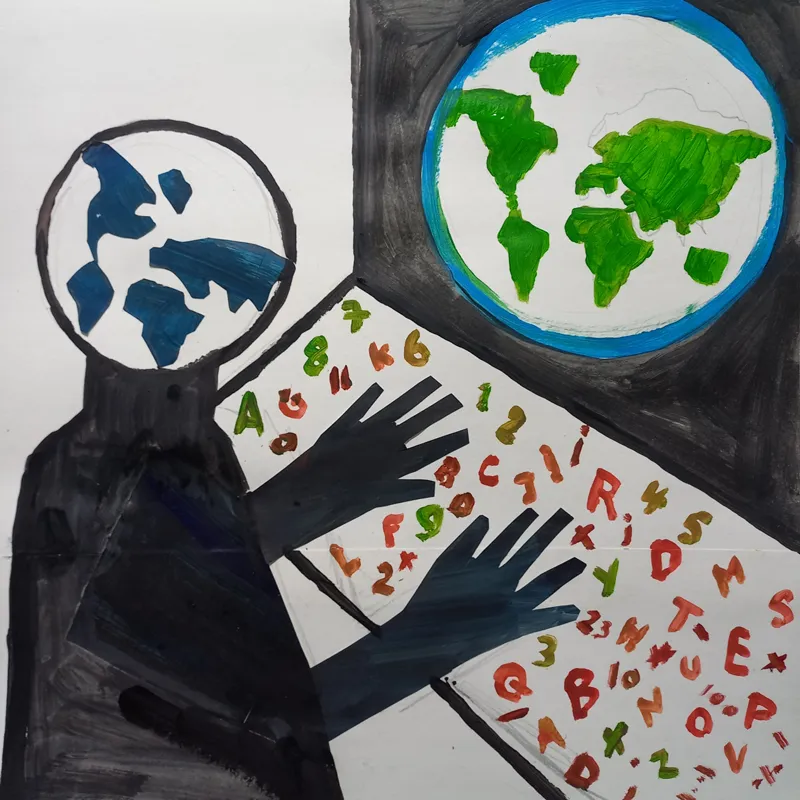
Connection, friendship and support online
Keyworld
Through my art, I want to show how being online connects me to the world. It helps me explore and discover new cultures, history and traditions around the world. Not only that, but it also answers all my curious questions and gives me a better understanding of the world and my surroundings. Simply, it makes me one with the world.
Phoben Alemayehu
Ethiopia • 14-18 y/o • ♀
Identity, privacy and belonging
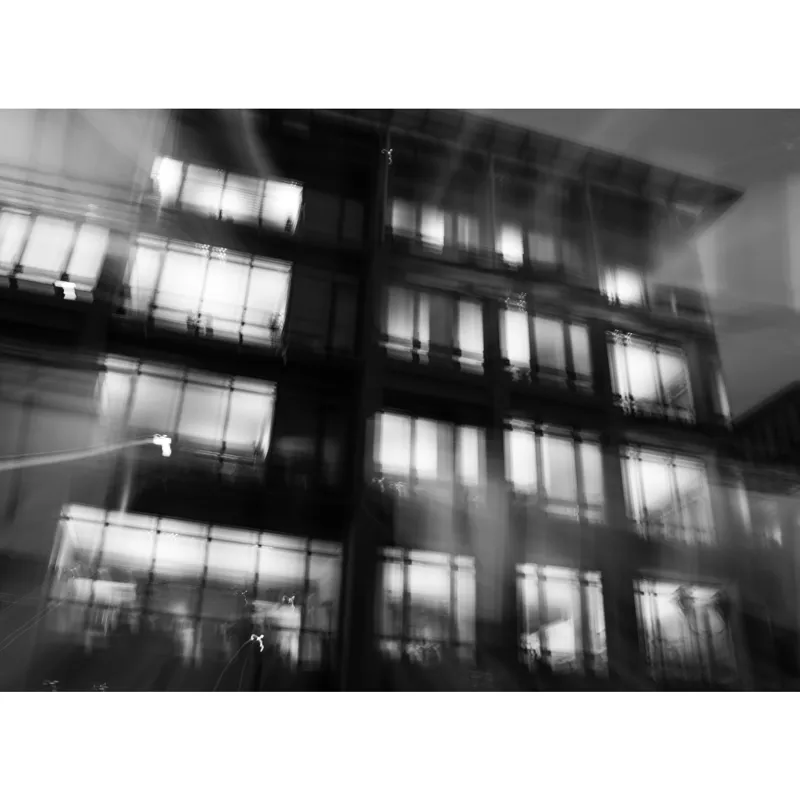
Radiations
In Radiation, the internet becomes an atmosphere rather than a tool. It hums through homes, offices, streets. Always on, always transmitting. Each window suggests a life connected, observed, uploading and receiving. The distortion in the image mirrors the distortion of reality: constant notifications, endless information, no silence. Even when you look away, it surrounds you, penetrating private spaces like unseen frequencies.
There is no single screen to turn off, no door to close against it. The world itself has become the device. The internet is not somewhere you go anymore, but something you live inside.
Reka Linemann
Sweden • 19-24 y/o • ♀
Identity, privacy and belonging
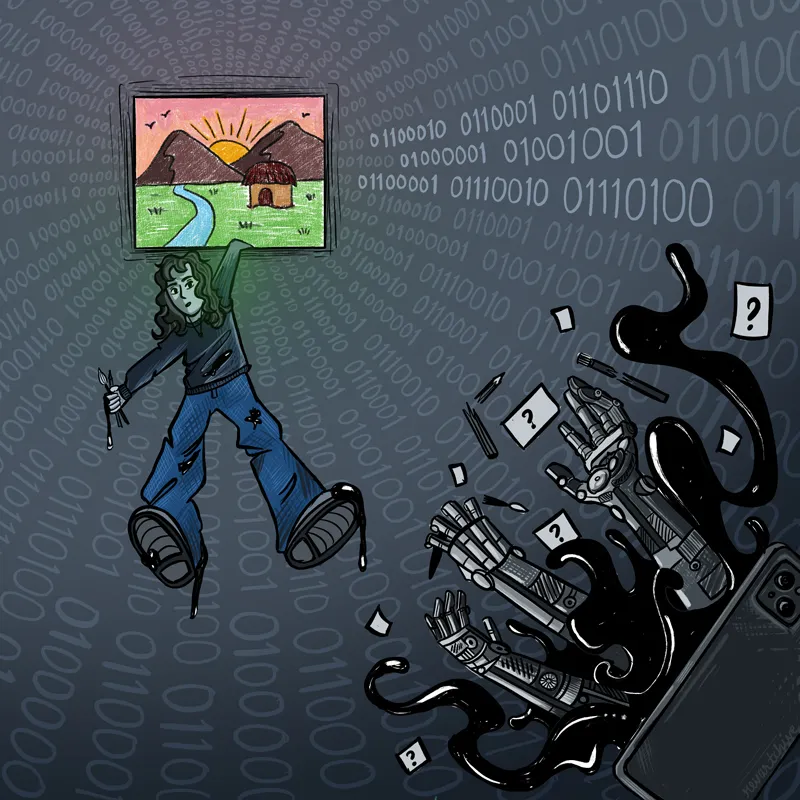
Hanging In There
As an artist, seeing the digital world being dominated by AI-generated content feels like falling into a lifeless void where human creation has been rendered obsolete. At its core resides the “soul” of AI, feeding on our artistic labour and spewing debris just to erase the creativity it leeched off from.
Even if the future seems bleak, a bright gateway opens into this void, resembling the initial instant from which human creativity acquires its colourful soul. These imperfect scribbles will always be more valuable than manufactured perfection, which is why I desperately hold on to that gateway. The digital world may be turning less human, but it will only crumble down without human creativity as its essence.
So despite all odds, I imagine, I dream, and I create, because that’s what makes me human.
I just need to hang in there.
Reva Sawant
India • 19-24 y/o • ♀
Striving for balance
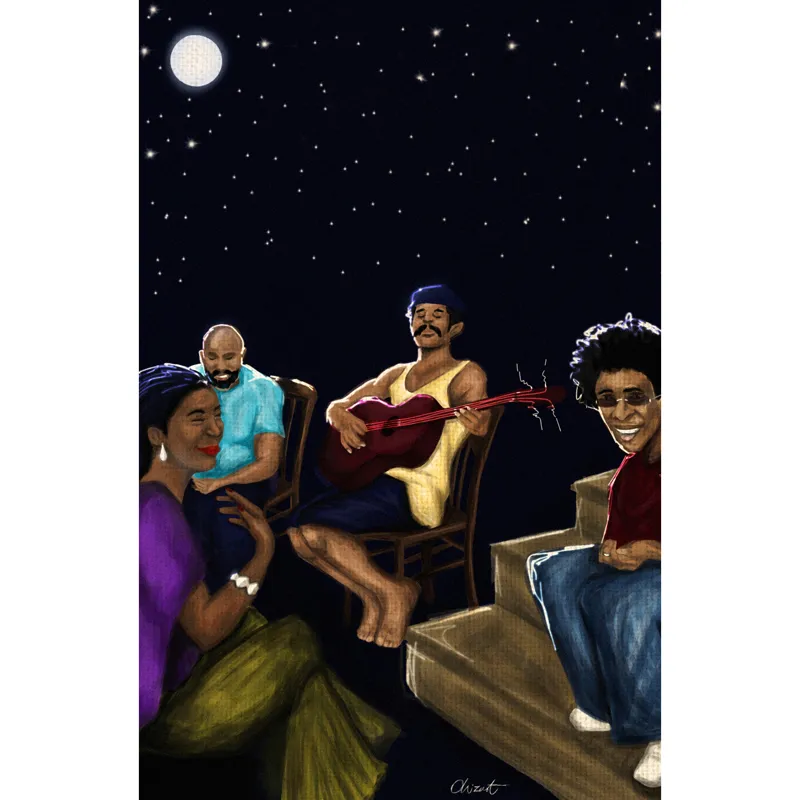
Strings Attached
Beyond the digital noise, "Strings Attached" captures the rare, unfiltered magic of a family uncoupled from their devices. It serves as a reminder that the strongest connections aren't found in a cloud or a feed, but in the simple, rhythmic joy of being fully present with the people who know us best.
Samuel Aigbokhaode
Nigeria • 19-24 y/o • ♂
Self image and well-being
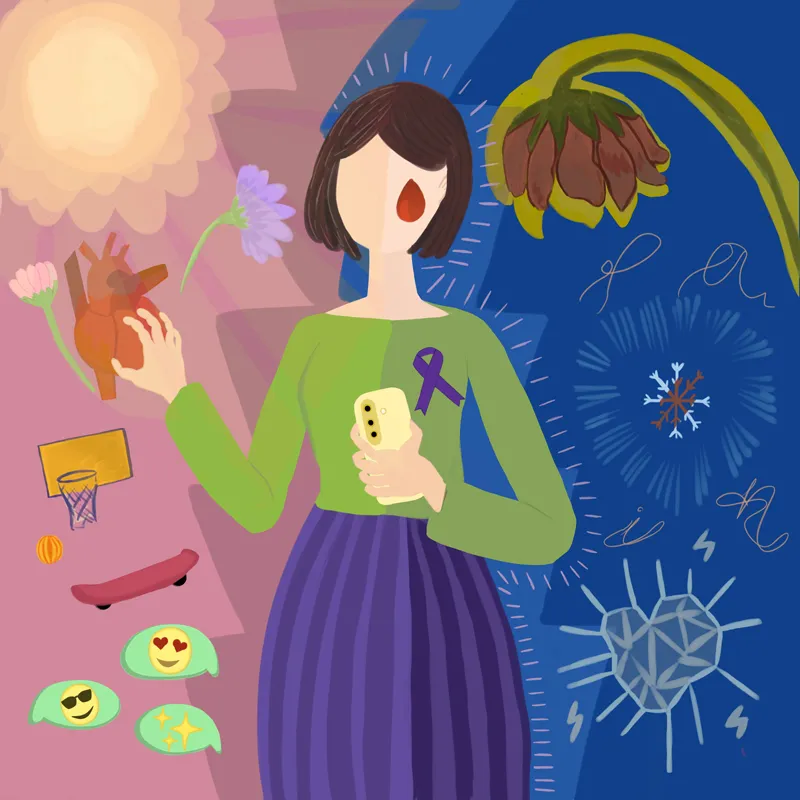
Digital Life Erases My Pain
I am a young person with chronic illness. Severe pain is part of my daily life.
Digital life, on the other hand, is where I am free of the weight on my shoulders. It is the place where I can get back to the things that once brought me happiness, and rediscover joy by, even briefly, forgetting the pain.
Though I cannot go trekking, I can admire beautiful artworks of nature shared by others. I can still feel the excitement of scoring for a team through my avatar, even if I cannot run or jump.
Going online reminds me that I am not alone, that I am still worthy of dreaming. In the digital world, we are equals, and I am not limited by my pain.
Suddenly, I am no longer a wilted flower, standing in the freezing cold of winter.
Sena Vardar
Turkiye • 19-24 y/o • ♀
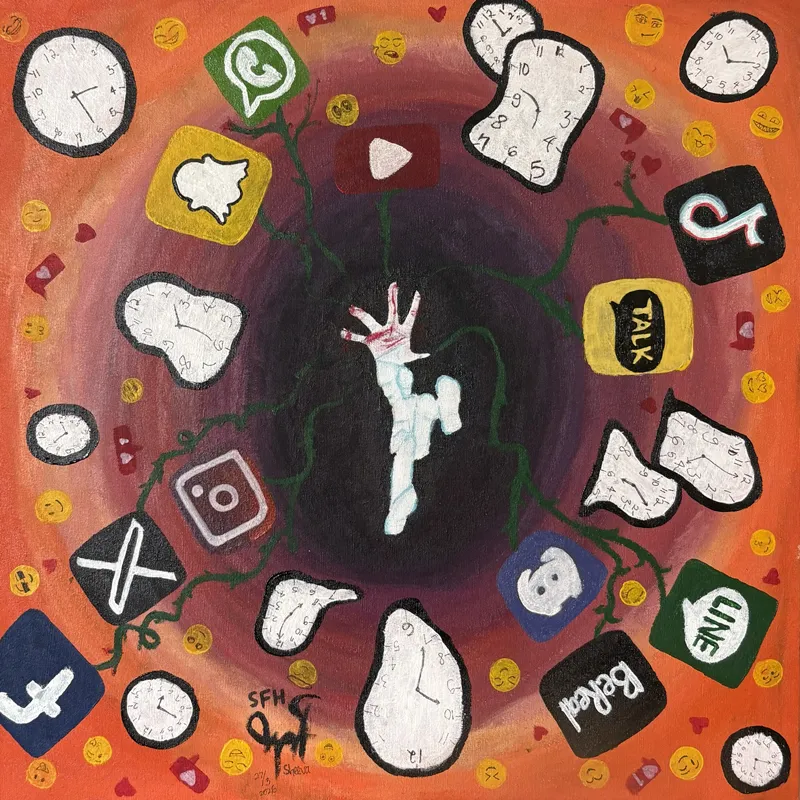
Digital overload and disconnection
Inspiration and Poison
Social media is an inspiration, but if one is obsessed with it and becomes dependent on it, it can be a poison to oneself.
Sheeva Farzana Haniarti
Indonesia • 19-24 y/o • ♀
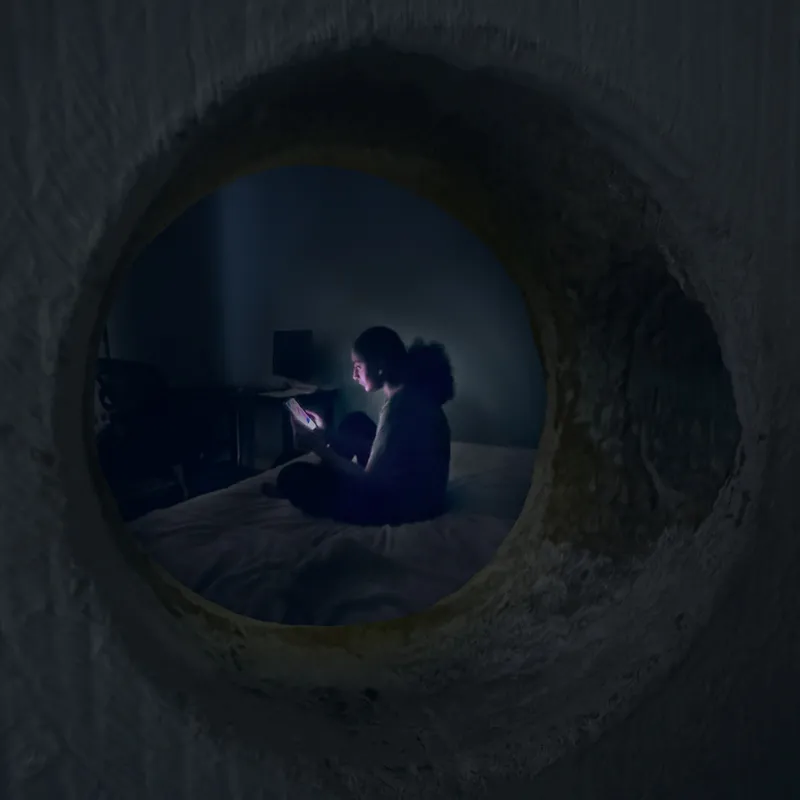
Digital overload and disconnection
Freedom in Isolation
Freedom in Isolation is a demonstration of the paradoxical relationship between isolation experienced in the physical world and the feeling of community that can be found in the digital world. Oftentimes, the people who rely on online spaces for connection are those who have experienced a strong lack of community in their real-world lives. When the physical world fails to provide, many people find it easier to derive their happiness and sense of support from interactions made through a screen.
Shruthi Sankuratri
USA • 19-24 y/o • ♀
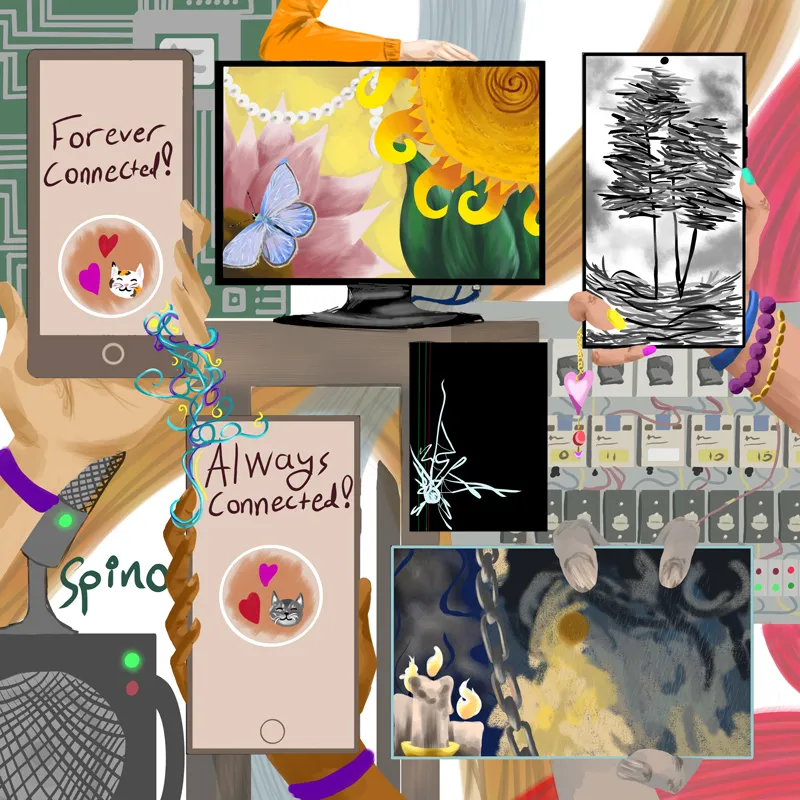
Emotions online
Being Online
While some have been connected, others left the experience at the first crack.
Others have found it black and white with their external lives colourful and full of life.
And maybe some saw beauty through their screens, while the only thing others saw was simply the darker corners.
Spinosairs
19-24 y/o
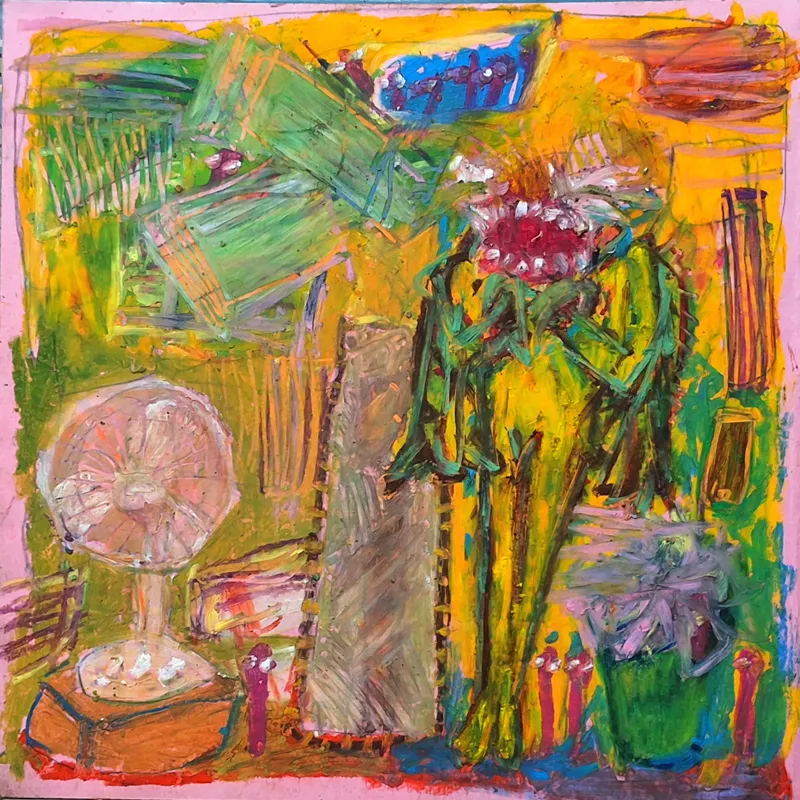
Between digital and physical worlds
When My Objects Don't Behave
The internet has always given freedom of space and speech to everyone, but now companies and capitalists have hoarded these previously quiet spaces.
I feel overstimulated and burnt out being online. So, using oil pastels, I drew a scenario of my own hostel room, crying, when the clutter in my room does not stop demanding my attention. Almost the same as today's internet.
A character is seen blending with the yellow background, and has a smudged identity. It feeds on the internet, and becomes it. A mirror placed nearby has no reflection. This work, through colors and textures, depicts the metamorphosed audio and visual clutter of the internet.
Vedika Bhoye
India • 19-24 y/o • ♀
Digital overload and disconnection
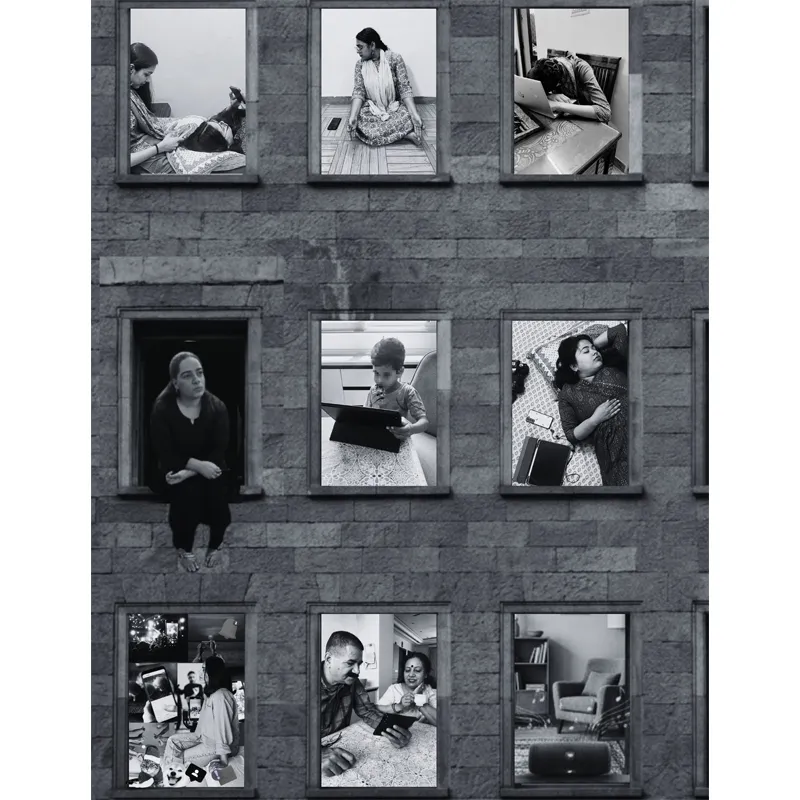
Rooms of Absence
This artwork explores the quiet, everyday ways in which we have become absorbed by our digital devices—physically present, yet mentally elsewhere.
Set within a building, each window reveals a familiar scene of disconnection: two friends sharing space but not attention, a meditation interrupted by a phone, a person asleep over a laptop, a child eating only through the mediation of a screen. Elsewhere, rest is surrounded by devices, thoughts fragment into endless digital tabs even while sitting alone, conversations unfold through screens even in shared moments, and a room hums with music but holds no one.
Across these windows, technology replaces stillness, presence, and genuine connection. The work reflects not dramatic isolation, but subtle, normalized absence.
In contrast, one window holds a figure sitting alone—awake to her solitude, highlighting a deeper paradox of the digital age: in a world constantly connected, loneliness persists.
Vibhuti Choyal
India • 25-30 y/o • ♀
Self image and well-being
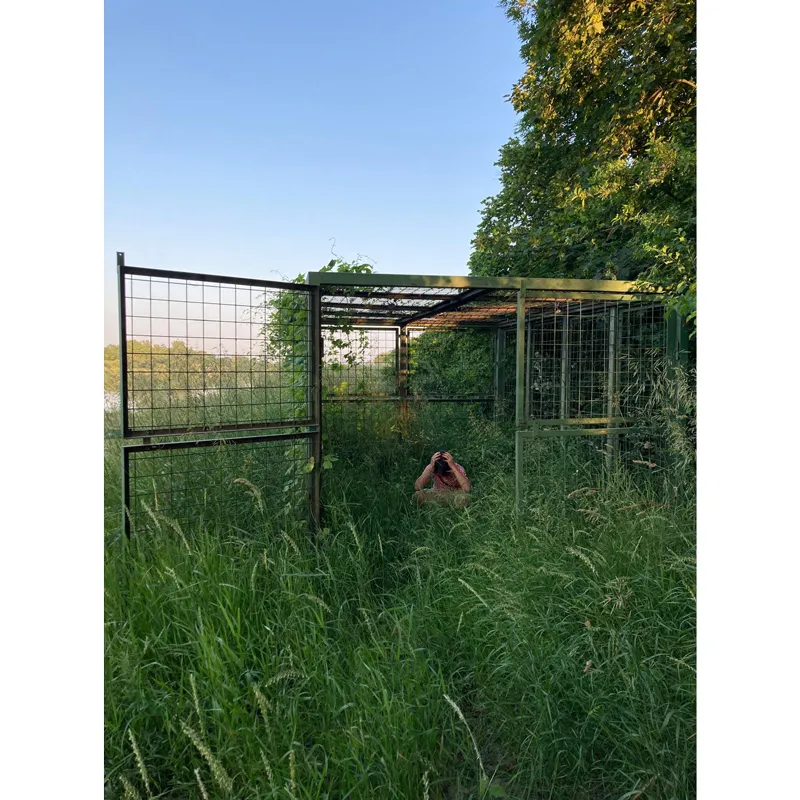
Paralysis
The image describes the state of consuming online media while feeling the crushing weight of the awareness that one is wasting time but cannot turn one's back on it. The opportunity of leaving this addiction paralyzes one in a way that creates a feeling of powerlessness, heteronomousity and unimportance. The surrounding shows the beautiful and diverse outer world which is not appreciated by the subject due to internal struggles.
Yannick Neiva
Austria • 14-18 y/o
Explore the Gallery
The Being Online gallery brings together selected artworks from young creators around the world. Together, they offer a rich and nuanced portrait of what it means to be online today.
A Space of My Own
Ally Zlatar
When Screens Affect Heartbeats
Amna Arif
Good Listener
Ashu Choudhry
İki Dünya Arasında (Between Two Worlds)
Ayaz Metin
Internet, It Helps and Distracts
Beauty Anthony
Consumed
Bemnet Meaza
Digital Human
Cahaya Listian Putri
Online Feel
Char
THE COST OF SCROLLING
Damilola Kayode
Mental Storm Online
Dieudonne Idam Eze
Digital Insomnia: Sleepless but Online
Elio Rrapi
Still Learning Balance
Eunice Jane Bnawan
Time Dilation
Favor Leo
Spiraling Through a Digital Playground
Frances Simone Morillo
Nested Signals
Gabriela Padilla
Chained to the Algorithm
Gift Wamatuba
The Wall Behind the Screen
Hetal Kumari
Divided Attention
Jena Nemr
Connected with Intention
Joseph Desire Nkuitchou Kengne
Analog Hearts in a Digital World
Joshua Efemuaye
Connected, We Thrive!
Julio Hernandez
TURN IT OFF
Mariel Seville
My 15 y.o Feeling
Mariia Kaminska
Another World
Merola Ehab
A la altura de nadie
Mikaela Quiroz
The Weight of Being Online
Mohammed Ahmed
A Mind Under Siege
Moyinoluwa Ajayi
Keyworld
Phoben Alemayehu
Radiations
Reka Linemann
Hanging In There
Reva Sawant
Strings Attached
Samuel Aigbokhaode
Digital Life Erases My Pain
Sena Vardar
Inspiration and Poison
Sheeva Farzana Haniarti
Freedom in Isolation
Shruthi Sankuratri
Being Online
Spinosairs
When My Objects Don't Behave
Vedika Bhoye
Rooms of Absence
Vibhuti Choyal
Paralysis
Yannick Neiva
Thank you!
Thank you to all participants for sharing their voices and perspectives. This gallery stands as a testament to the many ways young people experience and navigate digital environments today.